So you want to start a record company? That's awesome. But let's be real—it’s about more than just finding great bands. It’s about building a real, sustainable business that actually helps artists thrive. Think of it as part brand, part legal entity, part talent scout, and part marketing machine. A solid plan from day one isn't just nice to have; it's your most critical asset.
Your Blueprint for a Modern Record Company

Welcome to the controlled chaos of running your own label. This isn't just about discovering the next big thing; it's about building the business that lifts them up. I've seen too many passionate people jump in without a roadmap and hit major headaches later. This guide is that no-nonsense roadmap. We're going to turn your passion into a profession.
Let’s start with the basics: building a clear vision and a business plan that actually makes sense for today's music world. I'll walk you through how to define your label's unique identity, carve out your space in a ridiculously crowded market, and structure your operation for the long haul.
Finding Your Niche and Brand Identity
First things first: who are you? Before you sign a single artist or print a single t-shirt, you need to know what your label stands for. Are you the go-to for experimental jazz? A home for your city's punk scene? A launchpad for up-and-coming hip-hop producers? Getting specific makes everything else easier—from finding the right artists to building a fanbase that genuinely cares.
Your brand identity is born from that decision. It’s everything from your:
- Label Name: Make it memorable and unique. And please, for the love of music, check if it's already trademarked before you get attached.
- Visual Aesthetic: This is your logo, your album art direction, your website's vibe. It all needs to tell the same story.
- Mission Statement: A simple, clear sentence or two explaining why you exist. What's your purpose?
This identity is your promise. It tells artists and fans what to expect and why they should pay attention to you instead of the thousand other labels out there.
A label’s identity is its most powerful asset. People don't just buy a record; they buy into a story, a community, and a sound they trust. Your brand is that trust.
Budgeting in a Digital-First World
You have to understand where the money is in today's music industry. It’s not 1995 anymore. Globally, recorded music revenues hit $29.6 billion, and streaming is responsible for over half of that. That means digital platforms are where the growth is, and your budget needs to reflect this reality. If you want to nerd out on the numbers, the RIAA's revenue report is a good place to start.
So, how much cash do you need? Your initial investment could be as low as $10,000 for a scrappy, do-it-yourself setup, or it could easily climb past $100,000 if you’re hiring a team and planning big campaigns right out of the gate.
A realistic budget is key to not running out of steam before you even get started. Here’s a look at what some of those initial costs might look like for different scales of indie labels.
Initial Record Label Startup Cost Estimates
A breakdown of potential startup expenses for a small, independent record label to help you budget effectively.
Expense Category DIY / Micro-Label Estimate Boutique Indie Label Estimate Business Registration & Legal Fees $500 - $2,000 $2,000 - $7,500 Trademark Registration $350 - $1,000 $1,000 - $2,500 Website & Basic Branding $500 - $1,500 $2,500 - $10,000 Digital Distribution Setup $100 - $500 (annual) $500 - $2,000 (annual) Initial Marketing & Promo $1,000 - $3,000 $10,000 - $50,000+ First Release Production (if funding) $1,000 - $5,000 $5,000 - $25,000+ Accounting Software & Admin $300 - $800 $1,000 - $3,000 Contingency Fund (15-20%) $2,000 - $4,000 $10,000 - $20,000+ TOTAL ESTIMATED RANGE $5,750 - $17,800 $32,000 - $120,000+
Remember, these are just estimates. Your actual costs will depend entirely on your specific model and ambitions. But before you spend a single dollar on a cool logo or a PR campaign, get your legal house in order. Our small business setup checklist is a great place to start organizing those crucial first steps. If you create an actionable plan now, you’ll be ready to bring your vision to life without costly missteps.
Navigating the Legal Labyrinth of Your Label

Alright, let’s get into the part that makes most creatives groan but is absolutely critical for survival: the legal setup. Getting this right from day one is the difference between building a legacy and creating a liability nightmare. It’s the foundation that protects you, your artists, and every dollar you earn.
Think of it this way: your label is a business, not just a passion project. Treating it like one legally from the very beginning saves you from potential lawsuits, tax headaches, and ugly partnership disputes down the road. This isn't about becoming a lawyer overnight; it's about being an informed founder who makes smart, protective decisions.
Choosing Your Business Structure
One of the first—and most important—decisions you'll make is how to legally structure your company. This choice directly impacts your personal liability, how you're taxed, and the amount of paperwork you'll face.
The two most common paths for new indie labels are the Sole Proprietorship and the Limited Liability Company (LLC).
A Sole Proprietorship is the simplest route. It’s you, doing business as you. There's no legal separation between you and the company, which means if the label gets sued, your personal assets—like your car or savings—could be at risk. While it’s dead simple to set up, that lack of protection is a huge drawback for a business that deals with contracts and copyrights.
An LLC, on the other hand, creates a legal wall between your personal and business finances. If the label incurs debt or faces legal action, your personal assets are generally protected. It offers the liability shield of a corporation with less formal complexity, making it the preferred choice for most serious label owners. It involves more paperwork and filing fees, but the peace of mind is invaluable.
A crucial part of this journey is understanding the process of company incorporation, which is what formally establishes your label as a distinct legal entity. This is the step that solidifies the protective barrier an LLC provides.
Protecting Your Brand with Trademarks
You've landed on the perfect name for your record company—it’s memorable, cool, and captures your vibe. Now, you need to own it.
Registering your label's name and logo as a trademark prevents other people from using a similar name in the music industry. Why does that matter? Because it stops them from confusing fans and watering down your brand.
Imagine building a reputation for years, only to find another label popping up with a nearly identical name, causing chaos for your artists and their releases. A registered trademark gives you the legal power to stop that from happening. It’s a claim of ownership over your brand identity.
Protecting your intellectual property isn't just a defensive move; it's an investment in your label's future value. Your brand name and logo are assets that will grow in significance as your reputation does.
The Non-Negotiable World of Contracts
Every single relationship in the music business runs on contracts. I can't stress this enough: handshake deals and verbal agreements are a recipe for disaster. You need clear, written agreements for every collaboration to ensure everyone is on the same page and legally protected.
Here are the essential contracts you'll be dealing with constantly:
- Artist Agreements: This is the big one. It outlines the terms of your partnership with an artist, covering everything from the length of the deal and royalty splits to who owns the master recordings.
- Producer Contracts: This agreement details the producer’s role, their fee (which is often an advance), and their "points," or percentage of royalties from the songs they produce.
- Licensing Deals: These contracts grant permission for someone else to use your music in a specific way, like in a film, TV show, or advertisement.
These documents are complex, and using a generic template you find online is incredibly risky. Every deal is unique, and a single poorly worded clause can have massive financial consequences. To get a handle on the specific legal hurdles in this field, exploring the nuances of music and entertainment law can provide some critical context.
Collecting Your Royalties Through PROs
Finally, let's talk about getting paid. When your music is played on the radio, streamed online, or performed live, you and your artists are owed performance royalties. But how do you actually collect money from thousands of different sources?
That’s where Performing Rights Organizations (PROs) come in.
In the United States, the main PROs are ASCAP (American Society of Composers, Authors and Publishers) and BMI (Broadcast Music, Inc.). Their entire job is to track public performances of music and collect royalties on behalf of songwriters and publishers.
As a label, you'll likely act as a publisher for your artists, so registering your label's publishing entity with a PRO is essential. This step is completely non-negotiable if you want to see the money you’ve rightfully earned.
Finding and Signing Your Roster of Artists
This is where the magic happens. Your business plan is just a stack of paper until you find the music and the artists that bring your label to life. Finding and signing talent is all about building partnerships, not just acquiring assets.
But let's be real. In an age where any artist can upload their music directly to Spotify, why would they sign with you? You’re no longer a gatekeeper; you're a career accelerator. You have to offer something they can't easily do on their own, whether that’s cash, marketing muscle, or your industry connections.
Modern A&R Scouting Strategies
Forget waiting for demo tapes to show up in the mail. That’s ancient history. Modern A&R is an active, data-informed hunt for artists who are already building a fire. You’re looking for that spark, a unique sound, and—this is crucial—an existing audience, no matter how small.
Your scouting toolkit should look something like this:
- Social Media Analytics: Jump on platforms like TikTok and Instagram. Look for high engagement rates, not just a high follower count. A video with a few thousand passionate comments is way more valuable than one with a million passive views.
- Streaming Data: Tools like Spotify for Artists and Apple Music for Artists give you a direct line into an artist's performance. You want to see consistent monthly listeners, a growing follower base, and solid placements on independent playlists.
- Local Scene Immersion: There is absolutely no substitute for showing up. Go to local shows, hit the open mic nights, and check out artist showcases. Talk to venue owners, sound engineers, and other musicians—they always know who's generating real buzz.
This proactive approach helps you find artists who are already proving their concept. You're not just betting on a song; you're investing in an artist who has proven they have the drive to connect with people.
Defining Your Value and Making the Pitch
The game has changed. With independent careers becoming the norm, a staggering 86% of artists report never having a record deal. In fact, only about 4% of artists are signed to independent labels. Your offer has to stand out in a world where DIY is the default. You can explore the findings on The Metal Verse to get a better sense of this shift.
So, what makes your deal irresistible? Your pitch needs to solve the artist's biggest problems.
Your label's value isn't just about distribution; it's about providing the resources and expertise that turn an artist's potential into a sustainable career. You are their strategic partner, not their boss.
When you approach an artist, you better be ready to answer, "What can you do for me?" Your offer should be a custom package that might include:
- Financial Support: Funding to record a professional album, shoot music videos, or cover tour expenses.
- Marketing and PR: Access to publicists, playlist pluggers, and a digital marketing team to get their music heard.
- Strategic Guidance: Mentorship and career development to help them navigate the tricky parts of the music business.
- A Fair Deal: A transparent, artist-friendly contract with a reasonable royalty split. It needs to feel like a real partnership.
Negotiating a Fair Partnership
Once an artist is interested, it all comes down to the contract. This is where transparency and fairness are non-negotiable. Trust me, a bad deal can kill a relationship before it even starts. Your goal is to create an agreement that benefits everyone.
The contract is the legal backbone of your partnership. It defines everything from royalty rates and ownership of the master recordings to the length of the deal. While templates can be a starting point, every artist's situation is different. It's critical that both you and the artist have a lawyer review the terms. Having a solid grasp of different agreements is key, and our guide on music industry contract templates can give you valuable insight into what these documents typically include.
Ultimately, signing an artist is about belief. You're not just signing their music; you're investing in their vision, their work ethic, and their future. Building a roster is a marathon, not a sprint. It all starts by forging strong, respectful partnerships, one artist at a time.
Mastering Your Music Distribution and Release Strategy
Okay, you've found an incredible artist, and the record is finally done. That's a huge milestone, but don't pop the champagne just yet. The real work of getting that music from your hard drive into the ears of fans all over the world is just beginning. This is where your distribution and release strategy becomes everything.
Getting music out there is so much more than just uploading a file and crossing your fingers. It’s a calculated process designed to make an impact. Honestly, a well-planned release can be the difference between a song that vanishes into the digital void and one that actually finds an audience and builds real momentum.
Choosing Your Digital Distribution Partner
In today's streaming-first world, a digital distributor is your non-negotiable partner for getting onto platforms like Spotify, Apple Music, and TIDAL. These services are the bridge between your label and all the major digital storefronts. While they all do the same basic job, they operate on wildly different business models.
Think of it like picking a business partner—you need someone whose model aligns with your label's specific goals and, just as importantly, your budget.
- Annual Fee Models: Services like DistroKid charge a flat annual fee to upload unlimited music. This is usually the best bet for labels that plan on dropping a lot of tracks, since it keeps your costs predictable.
- Per-Release Fee Models: Companies like TuneCore typically charge a fee for every single or album you put out. This can be more cost-effective if you're only planning to release a few key projects a year.
- Commission-Based Models: Others, like CD Baby, might have a one-time setup fee per release and then take a small percentage of your royalties.
The right choice really boils down to your release volume. If you're dropping a new single every month, an unlimited plan just makes sense. If you're putting all your energy into one or two big album releases a year, a per-release model might save you money.
Choosing the right distribution partner is a critical step. To help you navigate the options, here's a breakdown of some of the most popular services.
Digital Music Distributor Comparison
Distributor Pricing Model Royalty Cut Best For DistroKid Annual Subscription (starts at $22.99/year for one artist) 0% Labels with multiple artists or frequent releases. TuneCore Per-Release Fee (starts at $14.99/single and $34.99/album per year) 0% Artists focused on a few high-priority releases per year. CD Baby One-Time Fee (starts at $9.99/single, $29.99/album) 9% Artists who prefer a one-time fee over recurring subscriptions. Amuse Free Tier & Pro Tier (starts at $24.99/year) 0% on Pro Tier New artists starting out or those wanting advanced analytics on Pro.
This table should give you a starting point, but always dig into the fine print yourself. A great distributor does way more than just upload your music; they provide detailed analytics, help with royalty splits, and offer tools to get your music properly registered. It's not just logistics; it's a core piece of your financial infrastructure.
Building a Bulletproof Release Timeline
Distribution is just one piece of the puzzle. The real magic happens when you build a strategic timeline around your release date. A song that just appears out of nowhere is a massive missed opportunity. You have to build anticipation and coordinate all your efforts to hit a peak on release day.
The infographic below breaks down the fundamental flow, from estimating your costs to allocating your budget for maximum impact.
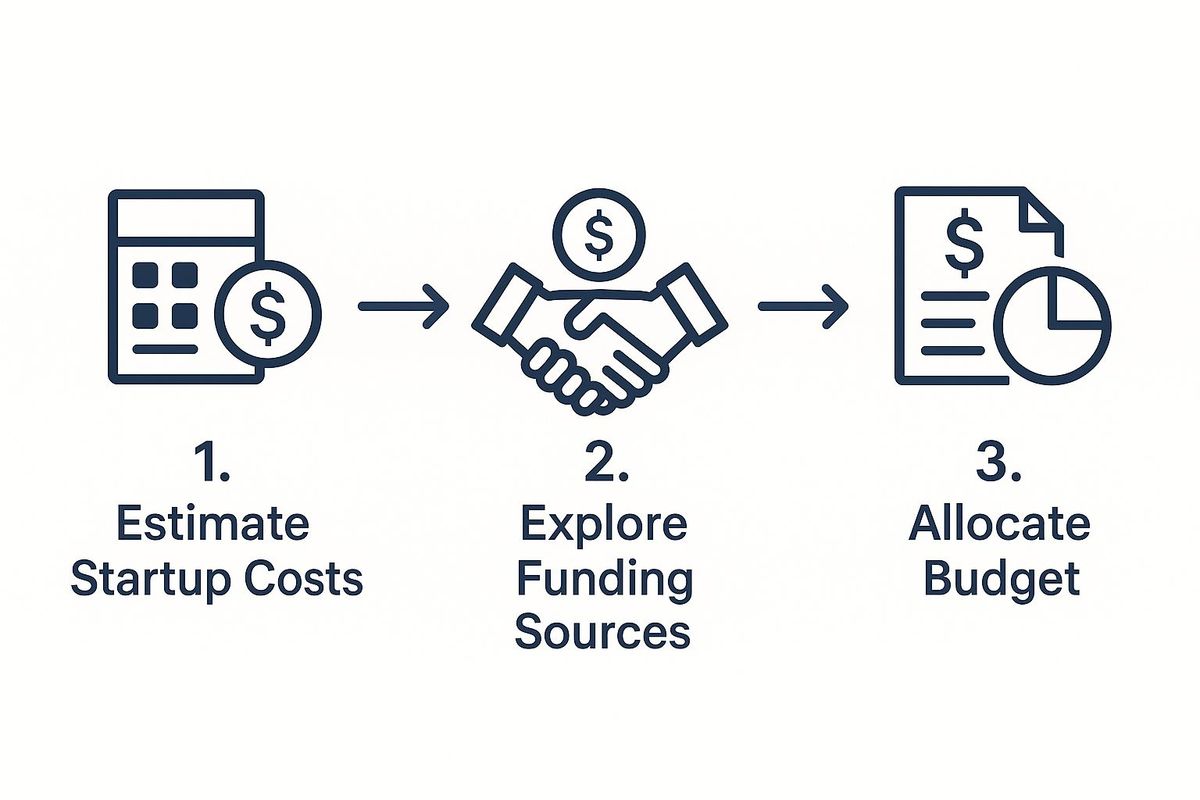
As you can see, a successful release isn't just about the song itself; it’s about smart financial planning that fuels your promotional machine.
You should be mapping out your release plan at least four to six weeks in advance. That buffer gives you enough time to properly execute each phase without rushing. A solid timeline might look something like this:
- 6 Weeks Out: Deliver the final master and artwork to your distributor. This is also your window to submit the track for editorial playlist consideration on platforms like Spotify for Artists. Don't miss this.
- 4 Weeks Out: Announce the release date and share the cover art. Fire up a pre-save or pre-order campaign to start capturing that early interest.
- 2-3 Weeks Out: This is when your main promotional push begins. Start sharing behind-the-scenes content, send the track out to press and radio contacts, and get your social media content scheduled.
- Release Week: Go hard on all marketing efforts. Go live on social media, jump into the comments to engage with fans, and keep a close eye on the initial performance data.
The Unsung Hero: Metadata
Finally, let’s talk about something that sounds incredibly boring but is critical for actually getting paid: metadata. This is all the information attached to your music file—the artist name, song title, writers, publisher, ISRC code, you name it.
If your metadata is wrong or incomplete, your royalties can get lost in the system, never to be seen again. Meticulously checking every single detail before you upload ensures that when your song gets streamed, sold, or played on the radio, the money finds its way back to you and your artist. It's the administrative backbone of every single successful release.
Marketing Your Music and Building a Fan Community
Here's the hard truth: great music doesn't find an audience by itself. In a world absolutely saturated with new releases, your marketing is what will separate your artists from the endless noise.
This isn't just about chasing streams. It's about building a brand and a community that fans genuinely want to join. Modern label marketing is a multi-front effort, and your job is to build a digital presence that tells a compelling story about your label and the artists you believe in.
Building Your Label's Digital Headquarters
Think of your online presence as the central hub for your label's entire identity. It's where artists, fans, and industry contacts will go to figure out who you are and what you stand for. This isn't just about having a website; it's about crafting a consistent brand narrative across every platform you touch.
Your core digital assets need to be solid:
- A Professional Website: This is your home base. It must feature your artist roster, your discography, a clear "About Us" page explaining your mission, and obvious contact info.
- Active Social Media Profiles: Go where your target audience lives. For most, that means a strong, consistent presence on Instagram, TikTok, and X (formerly Twitter).
- An Email Newsletter: Don't sleep on this. Your email list is your most valuable marketing channel—it's a direct line to your biggest supporters, completely free from the whims of social media algorithms.
The key is consistency. Your logo, color palette, and tone of voice must be the same everywhere. This cohesion builds trust and makes your label instantly recognizable.
Using Social Media to Promote Artists
Let's be clear: social media is no longer optional. It’s the primary battlefield for audience attention. Platforms like TikTok and Instagram have become essential for breaking new artists, with short-form video content fueling music discovery.
To make any real impact, your strategy has to be artist-centric. Don’t just post a graphic that says "New Single Out Now!" That's lazy. Instead, create content that tells a story.
Share behind-the-scenes clips from the studio. Post short interview snippets with your artists. Run user-generated content campaigns that encourage fans to use your music in their own videos.
For example, a 30-day content plan leading up to a new release could look something like this:
- Post teaser clips of the unreleased track.
- Host live Q&A sessions with the artist.
- Set up collaborations with influencers in your genre.
- Share a "day in the life" video showing the artist's creative process.
This approach turns marketing from a simple announcement into an engaging story that pulls fans into the artist's world. To really make this work, you need to cultivate a loyal fanbase. Check out these proven community building strategies to connect deeply with your audience and turn casual listeners into true supporters.
Modern music marketing is less about shouting and more about inviting people into a community. Fans want to feel connected to the artist's journey, and your job as a label is to facilitate that connection.
Getting on Playlists and Reaching Curators
In the streaming era, playlists are the new radio. Landing a spot on a popular Spotify or Apple Music playlist can be an absolute game-changer for an artist, leading to a massive spike in streams and new listeners.
Pitching to the big editorial curators, however, is intensely competitive. Your best shot comes from a professional, well-timed approach. You absolutely must submit your track through Spotify for Artists at least four weeks before the release date. Make sure you provide detailed info about the song’s genre, mood, and any marketing plans you have in place.
But don't just focus on the big players. There are thousands of influential independent playlists run by bloggers, dedicated music fans, and even other labels. Building relationships with these curators through professional, personalized outreach can be just as effective.
Never, ever send a generic mass email. Show them you’ve actually listened to their playlist and explain exactly why your artist is a perfect fit.
The music industry is a crowded space. The global record label ecosystem has over 100,000 active labels worldwide, and indie labels make up a huge portion of that. This competition means your marketing can't be an afterthought—it has to be a core part of your business from day one.
Common Questions About Starting a Record Company
Thinking about launching your own record company is exciting stuff, but it almost always comes with a storm of questions. From the practicalities of money to the bigger picture of what a label even does anymore, getting some clarity will help you move forward. Let's tackle some of the most common questions I hear from aspiring label owners.
How Much Money Do I Really Need to Start?
This is the big one, and the honest answer is: it really depends on your vision and how you plan to operate. You definitely don't need a massive, multi-million dollar investment to get your foot in the door.
Plenty of successful indie labels started out with a scrappy, DIY approach, running on a shoestring budget of just a few thousand dollars. This kind of money typically covers the absolute essentials like business registration, a simple website, and digital distribution fees. Industry folks generally estimate that a lean micro-label can get off the ground for somewhere between $5,000 and $15,000.
Now, if you're aiming for something more like a boutique indie label—with plans for real marketing campaigns, professionally shot music videos, and maybe even pressing some vinyl—your startup costs are going to jump. In that case, you could be looking at an initial investment anywhere from $30,000 to over $100,000. The key is to be realistic and build a budget that matches your specific goals.
Do I Need a Physical Office?
Especially when you're just starting? Absolutely not. In today's music business, a physical office is often just an unnecessary expense that eats into your budget. Nearly every part of a modern label's operations can be managed remotely, from finding artists and marketing them to handling distribution and accounting.
Instead of sinking money into rent, you can:
- Run it from home. This is how countless indie labels got their start. It works.
- Invest in good digital tools. Project management software, cloud storage, and communication platforms like Slack are your best friends for keeping a remote team in sync.
- Rent a PO Box. This gives you a professional mailing address without the overhead of an actual office lease.
Down the road, as your label grows and you bring on more people, you might decide an office makes sense. But at the beginning, that money is far better spent on your artists.
What Does a Record Label Actually Do in 2025?
The role of a record label has changed a ton. In a world where any artist can upload their music to Spotify with a few clicks, a label has to bring some serious, undeniable value to the table. It's not just about distribution anymore.
A modern record company is less of a gatekeeper and more of a strategic partner. Your main job is to provide the resources, expertise, and infrastructure an artist needs to take their career to the next level.
Think of your label as an artist accelerator. Your core functions really boil down to:
- Funding: You provide the cash for recording sessions, music videos, and tour support that an independent artist might not have.
- Marketing & Promotion: You’re the machine that executes professional marketing campaigns, pitches to playlist curators, and handles public relations.
- Strategic Guidance: You bring industry experience to the table, helping artists make smarter career moves.
- Administrative Support: You handle all the boring-but-critical backend work—royalty collection, licensing, and legal paperwork.
Essentially, you take the business headaches off the artist's plate so they can focus on what they do best: creating music.
Can I Start a Label and Release My Own Music?
Yes, and this is actually a very common and smart way to get started. Creating a label just to release your own project is often called a "vanity label," and it’s a brilliant strategic move. It forces you to learn the entire process on a small, controlled scale—from the legal setup and distribution to marketing and collecting royalties.
By being your own first artist, you get to work out all the kinks in your system. This kind of hands-on experience is priceless. It prepares you to confidently sign and support other artists when the time comes. It’s the perfect testing ground for your new business.
Navigating the legal maze of the music industry is one of the most important things you'll do for your new record label. At Cordero Law, we specialize in entertainment and business law, providing the strategic counsel you need to protect your artists and build a company that lasts. Let us help you lay a solid legal foundation for your label's success. Learn more about our services for creatives and entrepreneurs at corderolawgroup.com.