
So you want to start a record label. It’s more than just a passion project; it’s about turning your love for music into a real, structured business.
This means you’ve got to define your unique sound, handle the legal stuff, sign artists with fair deals, and get your head around modern music distribution and marketing. Think of this as your first strategy session—the one where your creative vision starts looking like an actual business plan.
From Passion Project to Professional Label

Welcome to the nuts and bolts of running your own record label. Yes, it’s an adventure that starts with a passion for music, but it’s built on a foundation of smart business moves. We’re going to cut through the aspirational fluff and get straight to what it actually takes to launch a label that sticks around.
Your very first job is to nail down your label's unique sound and mission. In an industry this crowded, a clear identity isn't just nice to have—it's everything. Are you the go-to for experimental electronic artists? A home for local folk musicians? Or a hub for a specific hip-hop subgenre? That focus becomes your brand, and it will guide every single decision you make, from who you sign to how you market them.
Understanding the Competitive Landscape
The music industry is a massive ecosystem. You have the "big three"—Universal, Sony, and Warner—at the top, but you also have thousands of indie labels carving out their own space. Globally, there are an estimated 10,000 to 15,000 independent labels, not to mention over 100,000 tiny DIY operations run by hobbyists and artists themselves. You can find more data on the global market over at Rexius Records.
This might sound intimidating, but it's actually where the opportunity lies.
The key isn't to compete with the majors, but to build a dedicated community around a sound that only you can champion. Your niche is your strength.
What you're really doing is becoming a curator. The goal is for listeners to trust your taste so much they'll check out any new artist you sign, sight unseen. That curatorial role is your most powerful asset. It’s what turns your label from just another business into a respected tastemaker.
Core Pillars of a Modern Label
Before getting into the weeds, let's look at the foundational pillars that hold up any successful modern label. Get these right, and you're building on solid ground.
To keep things simple, here’s a quick-reference checklist of the core areas you’ll need to focus on. These are the non-negotiables that will transform your idea into a functioning, legitimate business.
Your Modern Record Label Startup Checklist
| Pillar | Key Focus | Why It Matters |
|---|---|---|
| Business & Legal Structure | Choosing an entity (LLC, etc.), trademarking your name, and opening a business bank account. | Protects your personal assets and establishes your label as a professional, legitimate entity. |
| Artist Agreements | Crafting fair, clear contracts covering royalty splits, ownership, and term lengths. | Builds trust with your artists and prevents messy, costly legal disputes down the road. |
| Distribution Strategy | Getting music onto streaming services (Spotify, Apple Music) and maybe into physical formats. | Ensures your artists' music actually reaches listeners where they are. No distribution, no audience. |
| Marketing & Branding | Creating a strong brand identity—from your logo and website to your social media voice. | Helps you connect with fans, build a loyal community, and stand out in a crowded market. |
Each of these pillars is a world unto itself, and we'll be diving deep into all of them. But for now, just know that these four areas are the engine room of your label. Nail them, and you’ll have a solid launchpad for everything that comes next.
Building Your Business and Legal Foundation

Alright, this is where the dream gets real. Turning your record label from a cool idea into an actual business is a huge step. Getting the legal and financial foundation right isn't the most glamorous part of the gig, but trust me, skipping it is the quickest way to kill your label before a single track is released.
Let's cut through the jargon and lay down the essential groundwork that will protect you, your artists, and the brand you're about to build.
The first big decision you'll make is choosing a business structure. This choice dictates how you’re taxed, what you're personally liable for, and the kind of paperwork you'll be dealing with. It’s a move that casts a long shadow over your label's future.
Choosing Your Business Structure
You've basically got three main paths here: Sole Proprietorship, LLC, or a Corporation. Each comes with its own set of pros and cons. The right choice really boils down to your specific goals, how much risk you’re willing to take on, and whether you're flying solo or have partners.
Sole Proprietorship
This is the simplest setup, especially if you’re a one-person show. The paperwork is minimal, and you just report the label’s income on your personal tax return. But—and this is a big one—there is no legal separation between you and the business. If the label gets sued, your personal assets like your car, house, or savings account are on the line.Limited Liability Company (LLC)
For most indie labels just starting out, the LLC is the sweet spot. It gives you the personal asset protection of a corporation without all the complicated administrative hoops. Your personal stuff is shielded from business debts, but the tax situation remains flexible and relatively simple. There's a reason this is such a popular choice.Corporation (S-Corp or C-Corp)
This is the most heavy-duty option. A corporation offers the strongest liability protection but demands formal meetings, extensive record-keeping, and more complex tax filings. It's usually a better fit for larger labels, companies with multiple owners, or those planning to seek investment from outsiders.
Honestly, for most folks launching a label, an LLC strikes the perfect balance. It shows artists and partners you’re serious without burying you in corporate red tape.
Protecting Your Brand Name and Logo
Once you've landed on a name, you need to lock it down. Imagine grinding for years to build a reputation, only to get a cease-and-desist letter because some other company was already using that name. That’s a nightmare you can avoid with a trademark.
A trademark legally protects your label's name, logo, and slogans. It stops others in the music industry from using them and builds real value in your brand. Your name is your identity, and securing it is a critical first step.
If you’re trying to figure out where to even begin, you can learn more about how to protect your business name with our friends at Cordero Law.
A strong, protected brand is your most valuable asset. It's the flag your artists and fans will rally around. Don't leave it vulnerable.
The process usually means searching the U.S. Patent and Trademark Office (USPTO) database to make sure your name is unique, then filing an application. You can DIY it, but chatting with an entertainment lawyer can save you from making costly mistakes.
Managing Your Label’s Finances
With the legal side sorted, it's time to talk money. This is more than just having cash on hand; it's about managing it like a professional. The first rule? Separate your personal and business finances. This is non-negotiable.
Open a Business Bank Account
The second your LLC or corporation is official, head to the bank and open a dedicated business account. Do not pay for studio time from your personal checking or deposit streaming royalties into your personal savings. Keeping things separate is vital for a few key reasons:
- Liability Protection: It reinforces that legal wall between you and the business.
- Accurate Bookkeeping: It makes tracking income, expenses, and artist royalties a million times easier.
- Professionalism: It just looks better. Paying artists, distributors, and vendors from a business account shows you run a legitimate operation.
Creating a Realistic Budget
Your first budget needs to cover more than just recording costs. A ton of little expenses can sneak up on you. A solid startup budget should at least account for:
- Business registration and legal fees
- Trademark application costs
- Website hosting and design
- Digital distribution fees
- A basic marketing push for your first release
- Artwork and design
- Artist advances (if they're part of your plan)
Starting with a clear financial roadmap, even a simple spreadsheet, will help you make smarter decisions and keep you from running out of cash right when things are getting good. Get this foundation right, and you can get back to focusing on what matters most—the music.
Signing Artists and Crafting Fair Contracts

A record label is just a business entity until you add the most crucial element: artists. This is where the real work begins. Signing talent is the core of your operation, and the contracts you create will define your relationships and, frankly, your entire reputation in the industry. You're shifting from a founder to an A&R professional, curating the sound that will become your label’s signature.
Modern A&R (Artists and Repertoire) isn't about sifting through stacks of demos anymore. Today, it’s about finding artists who have already started building their own momentum. You're looking for a unique sound, a clear artistic vision, and a work ethic that’s obvious from their online presence.
The game has changed. With streaming projected to grow another 10.3% in 2025, labels have to be masters of digital marketing to cut through the noise. On top of that, many artists are choosing to stay independent. Your label has to offer something compelling, something more than just a check—like smart, data-driven promotion and flexible contracts that respect their hard-earned autonomy. You can explore more on these evolving artist development strategies in this insightful article on Reprtoir.com.
What to Look for in a Potential Artist
When you're scouting for talent, you need to think like a strategic partner. Raw talent is non-negotiable, of course, but it’s only one piece of the puzzle. A successful artist today is also an entrepreneur in their own right.
Here are the key things I always look for:
- A Growing Online Footprint: Don't just look at follower counts; look at the engagement. Are fans actually commenting, sharing, and creating their own content around the music? That's the sign of a real community.
- A Consistent Release Schedule: Do they put out music regularly? This shows they’re committed and understand how to keep an audience hooked.
- A Professional Attitude: How do they talk to collaborators, venue owners, and their fans? A good attitude is invaluable and, trust me, often overlooked.
- A Clear Artistic Identity: Their music, visuals, and messaging should all feel connected. It shows they have a strong vision and they know who they are.
The best artists to sign are those who are already acting like they’re signed. They aren't waiting around for a deal to start building their career; they're already in the trenches. Your job is to pour gas on the fire they've already started.
Understanding Different Types of Record Deals
Once you've found an artist you believe in, it’s time to talk deals. The old "one-size-fits-all" record contract is a relic. Today’s independent artists expect flexibility, and offering the right kind of deal can make or break your relationship before it even starts.
Here’s a quick rundown of the common agreements you'll see:
- Traditional Royalty Deal: The classic model. The label fronts the money for recording, marketing, and distribution. In return, the label owns the master recordings for a set period and gets paid back first. The artist receives a percentage of the revenue (royalties) after the label has recouped its investment.
- 360 Deal: This is a much bigger partnership. The label gets a piece of the artist's total income—touring, merch, publishing, you name it. For this to be fair, the label has to provide significant support across all of those areas, not just the record.
- Distribution-Only Deal: Simple and straightforward. The artist keeps 100% ownership of their masters. The label’s job is just to get the music onto streaming platforms and into stores for a flat fee or a small percentage of the revenue.
- Profit-Split Deal: A favorite for indie labels and for good reason. The label and artist agree to split the profits 50/50 after all expenses (recording, marketing, etc.) are paid back. It feels more like a true partnership because everyone wins together.
Crafting a Fair and Clear Contract
No matter which type of deal you go with, the contract has to be crystal clear. Vague language is a recipe for disaster down the road. While you can find templates online, investing in an entertainment lawyer to draft or review your agreements is one of the smartest moves you can make. If you want to get a head start, our guide on negotiating business contracts has some valuable tips that apply here, too.
Your contract should clearly spell out these key points:
- Term: How long does the agreement last? Is it for a number of years or a certain number of releases (e.g., one album, two EPs)?
- Ownership: Who owns the master recordings? If it's the label, is there a clause for the rights to revert back to the artist after a certain amount of time?
- Royalties: What's the exact split? How and when will royalties be paid? Be specific.
- Advance: Is the label giving the artist an advance? If so, how much is it, and how exactly will it be recouped from future earnings?
- Responsibilities: What, specifically, is the label obligated to do (marketing budget, tour support)? And what is the artist obligated to do (deliver masters on time, show up for promo)?
Building your label on a foundation of fair, transparent contracts will do more than just protect you legally—it will earn you a reputation as a label that artists actually want to work with.
Mastering Music Distribution and Release Strategy
Once you have incredible music from a signed artist, the real work begins: getting that music to the world. A smart distribution and release strategy is what separates professional labels from passion projects. It’s not just about uploading files and hoping for the best. This is a coordinated push to build momentum, find the right listeners, and make a genuine impact.
Navigating the world of distribution is one of the most important decisions you'll make. This choice directly impacts your revenue, your reach, and the data you get back to make smarter marketing moves down the line.
Choosing Your Digital Distribution Partner
Your digital distributor is your pipeline to the platforms that matter—Spotify, Apple Music, Amazon Music, you name it. They handle the technical backend, deliver your music, and collect the royalties you've earned. On the surface, many of these services look the same, but their fee structures and features can be wildly different.
DistroKid: Known for its simple, annual flat-fee model. You pay once a year and can upload unlimited music for an unlimited number of artists, keeping 100% of your royalties. It's a favorite for labels that plan on putting out a lot of releases.
TuneCore: This service operates on a per-release fee structure. You pay a fee for each single or album you distribute. While this can get more expensive for prolific labels, they offer really solid analytics and have been a trusted name in the game for years.
CD Baby: With CD Baby, you pay a one-time fee per release with no recurring annual payments. They also offer physical distribution services for CDs and vinyl, which can be a huge plus if you’re catering to a fanbase that loves to collect.
Your distributor should be a partner, not just a service. Look past the fees and really dig into their analytics, customer support, and any extra tools they offer, like playlist pitching portals. Those are the features that actually help you grow your artists' careers.
Before you make a final call, it’s worth comparing the top players head-to-head.
Choosing Your Digital Music Distributor
| Distributor | Pricing Model | Key Features | Best For |
|---|---|---|---|
| DistroKid | Annual flat fee | Unlimited uploads, 100% royalties, fast delivery, automatic revenue splits | Labels with a high volume of releases and multiple artists. |
| TuneCore | Per-release fee (annual or one-time) | Detailed sales analytics, publishing administration add-on, strong industry reputation | Labels prioritizing deep data insights and publishing support. |
| CD Baby | One-time fee per release | Physical distribution (CD/vinyl), sync licensing opportunities, no annual fees | Artists and labels wanting both digital and physical options. |
Each of these distributors can get the job done, but the "best" one truly depends on your release schedule, budget, and long-term goals.
Building an Effective Release Timeline
A great release doesn't just happen—it's meticulously planned. Dropping a track without a strategy is like shouting into the void. A well-structured timeline, often spanning 6-8 weeks, gives you the runway you need to build hype and make sure your launch day lands with a bang.
Here’s a simplified look at how this breaks down:
Distribution Upload (6-8 Weeks Out): Get your final mastered track, artwork, and metadata uploaded to your distributor. This gives them plenty of time to get it delivered to all the platforms and unlocks crucial pre-release tools for you.
Playlist Pitching (4 Weeks Out): As soon as your track is in Spotify's system, you can use your Spotify for Artists account to pitch it directly to their editorial team. This is your shot at landing on those big, career-making playlists.
Pre-Save Campaign (2-3 Weeks Out): Launch a pre-save campaign to get fans to save the track to their libraries before it's even out. This is a huge signal to Spotify's algorithm that your release has early momentum.
Content Rollout (1-2 Weeks Out): This is when you and your artist start flooding social media with teaser content. Think behind-the-scenes clips, short audio snippets, and countdown graphics to get everyone excited.
The Power of Physical Media
While streaming is king, don't sleep on the power of physical media. The music industry is seeing some serious growth, with total recorded music revenues expected to hit $29.6 billion in 2024. And while streaming makes up over half of that, physical formats like vinyl have seen their 18th consecutive year of revenue growth. That tells you there’s a dedicated, passionate market out there. You can dig into more of these trends in the IFPI Global Music Report.
The image below gives you a solid idea of where the money comes from.
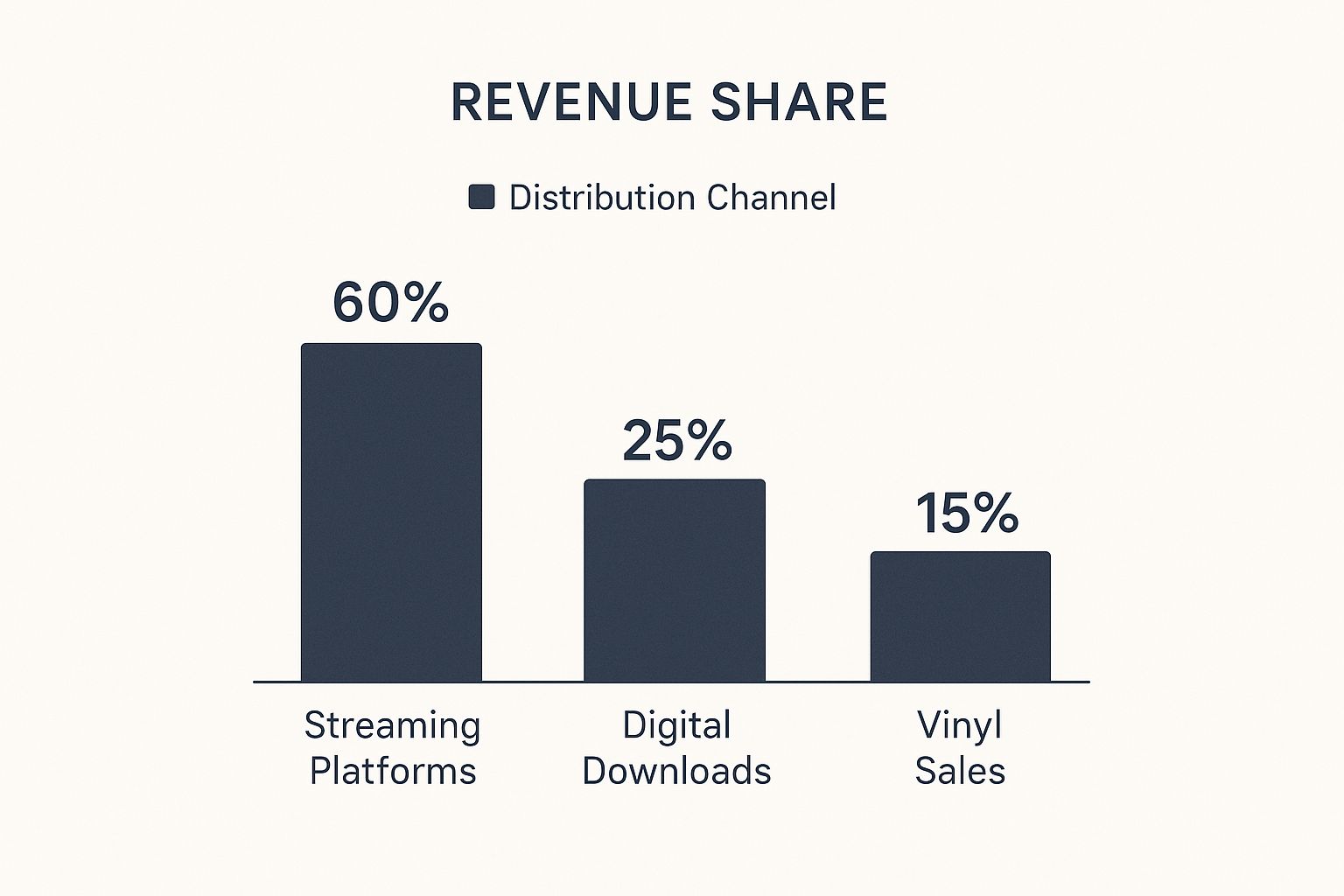
This visual shows that even though streaming is the biggest slice of the pie, physical sales still represent a profitable piece for indie labels. For niche genres with die-hard fanbases, offering a limited-edition vinyl run isn't just a product—it's a killer marketing tool and a direct line to your most loyal supporters. Of course, managing production for vinyl or CDs requires careful planning around manufacturing times and costs, but the payoff in both revenue and fan loyalty can be massive.
A winning strategy often blends a strong digital push with a targeted physical offering. It’s also critical to understand the difference between master recording rights and publishing rights. Your distribution deal covers the masters, but publishing is a whole different revenue stream. If you're new to this, we highly recommend reading our guide on what music publishing is and how it works to make sure you aren't leaving money on the table.
Marketing Your Music and Building a Brand
Having great music is non-negotiable, but it’s only half the battle. Without a smart marketing plan, even the best tracks get buried in the endless sea of new releases. This is where you shift from just putting out music to actively building a brand and an audience that sticks around.
Forget the idea that you need a massive budget for a huge campaign. We’re talking about smart, targeted, and effective tactics that an indie label can pull off right now.
Your goal is to turn your label's name into a seal of quality. When someone sees it, they should immediately have an idea of the sound and trust that it’s going to be good. You build this reputation through a consistent look, a clear message, and most importantly, real connections with a community of fans.
Crafting the Essential Electronic Press Kit
Before you even think about reaching out to anyone, you need to get your toolkit in order. That tool is the Electronic Press Kit (EPK). Think of it as your digital resume—a single, clean link where journalists, bloggers, and playlist curators can find everything they need without having to ask.
Trust me, a sloppy or incomplete EPK is the fastest way to get your email deleted. It shows you don't respect their time.
A solid EPK needs to be clean, professional, and straight to the point. Here’s what’s inside:
- Artist Bio: A short, well-written story about the artist. Don't just list their life story. Focus on what makes them unique and compelling.
- High-Resolution Photos: Include a few professional press shots, both portrait and landscape. Make it clear they are approved for media use.
- Music Links: This is crucial. Provide private streaming links (a private SoundCloud or Disco link is standard) for the unreleased music. Also, include links to their public profiles on Spotify and Apple Music.
- Key Accomplishments: List any solid press mentions, playlist placements, or notable streaming numbers you've already racked up.
- Contact Information: Don’t make them hunt for it. Clearly state who to contact for interviews or more info.
Your EPK is your first impression. Make it count. A sharp presentation signals that you’re serious and professional.
Building Your Outreach Machine
Okay, you’ve got a killer EPK. Now what? It’s time to find the right people to send it to. The key here is targeted outreach, not a shotgun blast. Sending out hundreds of generic emails is a complete waste of time and energy.
Your real job is to build a curated list of music bloggers, playlist curators, and maybe even radio DJs who actually cover the kind of music you're releasing. Start digging around. Find blogs and playlists that have featured artists similar to yours. Don't just aim for the giants; smaller, niche blogs often have super-engaged audiences and are way more likely to give you a shot.
A thoughtful, personalized pitch to a small blog with 1,000 passionate readers is infinitely more valuable than a form email that gets ignored by a major publication. Focus on connection over sheer volume.
When you write the pitch, keep it short and personal. Mention a recent article they wrote or a track you loved on their playlist. This tiny bit of effort proves you've done your homework. Briefly introduce your artist, explain why you think their music is a perfect fit for their specific audience, and drop a clear link to the EPK. Then get out of the way.
Leveraging Social Media for Community Building
Social media is not just a megaphone to shout "new single out now!" It's a two-way street. Your label's social channels should become a hub for fans of your particular niche. It’s less about constant self-promotion and more about creating a space where people who love your sound can connect.
Focus on content that gives people more than just a sales pitch.
- Behind-the-Scenes Content: Post videos from the studio, candid photos from a video shoot, or a "day in the life" of your artist. This stuff humanizes the music and makes fans feel like they're part of the inner circle.
- Showcase Your Taste: Don't just post your own releases. Share music from other artists you love that fits the label's vibe. This reinforces your identity as a trusted curator, not just a seller.
- Engage Authentically: Jump into the comments, ask your followers questions, and start real conversations. When a fan feels heard, they go from being a passive listener to a true advocate for your label.
Running Targeted Ads on a Shoestring Budget
You don't need a huge ad budget to make an impact. Small, hyper-targeted campaigns on platforms like Instagram and Facebook can work wonders for a new release, especially if you’re smart about it.
The secret is getting super specific with your audience targeting.
Instead of a broad interest like "hip-hop," drill down. For example, you could target users who "like" specific niche artists similar to yours, follow certain music blogs, and live in key cities where your artist has a small following. A tiny $50-$100 campaign aimed at this laser-focused audience can drive a surprising amount of traffic to a new single on Spotify. This can give the algorithm the initial push it needs to start showing your music to more listeners.
The goal isn't to reach everyone; it's to reach the right one thousand people who are most likely to become actual fans.
Common Questions About Starting a Record Label
Starting a record label is a huge undertaking, and it’s natural for questions to be swirling around your head. Let's tackle some of the most common ones I hear from clients to give you the clarity you need to get moving.
The first question is almost always about money. It's the one thing that stops so many talented people from even trying.
How Much Does It Really Cost to Start?
You can actually get started for less than you think. There's no single magic number, but a lean, digital-only label can realistically be launched for under $1,000. That would cover the absolute essentials like registering your LLC, throwing up a basic website, and paying the fees for digital distribution on your first couple of releases.
But if you want to give it a real shot, a more practical starting budget is somewhere between $5,000 and $10,000. That bigger cushion allows you to handle things properly:
- Legal Fees: Getting your contracts drafted correctly and registering your trademark.
- Modest Advances: A small, good-faith advance for your first artist is a great way to start a partnership.
- Marketing Budget: Money for targeted social media ads and maybe some light PR.
- Physical Media: A small run of vinyl or merch, which can actually be a solid revenue stream right out of the gate.
The trick is to start lean. Don't feel like you need a massive war chest on day one. Your label can grow organically as you start bringing in revenue.
Do I Need an Office or a Studio?
Absolutely not. Especially not when you're just starting out. In the beginning, your “office” is your laptop, and most independent artists you'd be working with already have their own home recording setups anyway.
Your job isn't to provide a physical space; it's to provide the strategy and infrastructure. Focus on coordination, marketing, and distribution. By operating remotely, you keep your overhead incredibly low, which frees up your limited cash to invest where it really matters—in your artists and their music.
Don’t get bogged down by the old-school image of a record label with a fancy office downtown. Your value comes from your vision, your network, and your ability to execute a release plan—not your real estate.
What Makes a New Label Stand Out?
In a world where thousands of new songs are uploaded every single day, the only way to stand out is through curation and community. Your unique taste is your most powerful asset. A great indie label isn't just another business; it's a trusted tastemaker for a specific niche.
Focus on a sound or a scene you're genuinely passionate about. When fans know that every single release on your label will hit a certain standard of quality and fit a particular vibe, they start to trust you. They'll check out a new artist just because they're on your roster.
That trust is your brand. Build a community around that brand using social media, events, and authentic engagement. This is how you create a loyal fanbase that sticks with you for the long haul, release after release. A strong identity will always cut through the noise more effectively than a big budget.
At Cordero Law, we specialize in helping creative entrepreneurs navigate the legal complexities of the music industry. From business formation to artist contracts, we provide the strategic counsel you need to build your label on a solid foundation. Learn more about how we can empower your vision at corderolawgroup.com.