Alright, let's get into the nitty-gritty of building your record label from the ground up. Before you can even think about signing artists or dropping the next big hit, you need to build a solid framework.
This is your pre-launch checklist for building a music brand that lasts. Think of it as laying the groundwork for a house; without a strong foundation, everything else you build on top is at risk of collapsing. Let's get practical.
Define Your Unique Sound and Niche
First things first: what kind of music is your label going to champion? Your biggest advantage as a new indie label isn't trying to compete with the majors—it's owning a specific corner of the music world.
Choosing a niche is your superpower. Whether it's underground techno, lo-fi hip-hop, or experimental folk, that focus helps you attract a dedicated fanbase that trusts you as a curator. It also makes your A&R process way more efficient because you know exactly what you're looking for. A clear identity just makes everything easier, from marketing to messaging.
Don't try to be everything to everyone. The goal is to become the go-to source for a particular sound. The global music scene is massive—the International Federation of the Phonographic Industry (IFPI) estimates there are over 100,000 labels worldwide. That sounds crowded, but it actually proves there's plenty of room for specialized labels to find their audience and thrive.
This infographic breaks down the key differences between going major versus staying independent.
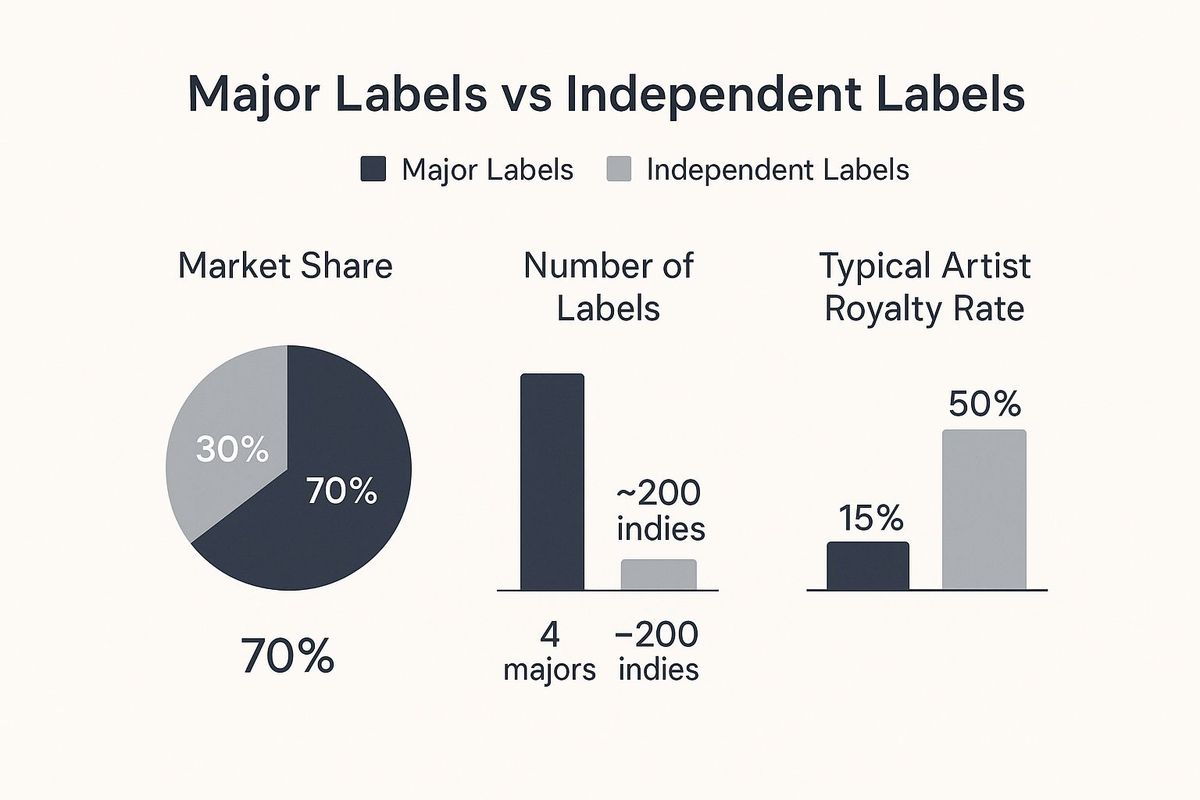
While the majors dominate market share, the real story for artists is in the royalty rates. Indies offer a much bigger piece of the pie, which is a powerful negotiating tool when you're trying to attract new talent.
Choose the Right Legal Structure
Now for the less glamorous but absolutely essential part: making it official. The legal structure you choose for your label impacts everything from your personal liability to how you handle taxes. Don't just pick the easiest option; think about your long-term goals.
Deciding on the right business structure can feel overwhelming, so here’s a quick breakdown of the most common options for a new label.
Choosing Your Business Structure
Structure Type Key Benefit Best For Sole Proprietorship Simplest and cheapest to set up. Individuals just starting out with minimal financial risk. Partnership Easy to form with multiple owners. Two or more people starting a label together. LLC Protects personal assets from business debts. Most new labels seeking liability protection without corporate complexity. S Corporation Potential tax advantages for owners. Established labels ready for more formal structure and tax planning.
Each path has its own pros and cons, but one option usually stands out for new label owners.
A Sole Proprietorship is the default if you just start doing business. It’s simple because you and the business are legally the same entity. The big downside? Your personal assets, like your car or home, are on the line if the label gets into financial trouble.
For most new labels, an LLC (Limited Liability Company) is the way to go. It creates a legal wall between you and your business, shielding your personal assets. Setting one up costs a bit—usually between $100 to $500—but that initial investment buys you crucial peace of mind.
Key Takeaway: Forming an LLC is a powerful first step. It signals that you’re treating your label as a serious business, not just a hobby, which gives you credibility with artists, distributors, and partners.
Crafting Your Brand Identity
With the legal stuff sorted, it’s time for the fun part: building your brand. Your brand is more than just a slick logo. It’s the entire vibe of your label—the personality, the aesthetic, the story you tell. It's what makes someone want to wear your t-shirt or instantly trust your musical taste.
Start with these core elements:
- Pick a Memorable Name: It needs to be unique, easy to say, and reflect your label's sound. Before you get attached, check if the domain name and social media handles are available.
- Design a Killer Logo: Your logo will be everywhere—on album art, merch, your website, social profiles. It should be simple, versatile, and instantly recognizable even when it's tiny.
- Secure Your Online Turf: As soon as you have a name, register your domain (yourlabel.com) and claim your social media handles (@yourlabel) on every platform that matters, like Instagram, TikTok, and X. Consistency is everything.
Getting Your Money and Contracts Right
Okay, let's talk about the two things that make or break a new label: money and contracts. This is where the dream meets reality. It might not be as exciting as finding the next big artist, but getting a handle on your finances and legal paperwork is what turns a passion project into a real, sustainable business.
Don't worry, you don't need to become an overnight accountant or lawyer. The goal here is to get you comfortable enough to manage your label’s cash flow, protect your brand, and build solid, trusting relationships with your artists from day one.
Building a Smart Startup Budget
Before you spend even a dime, you need a map for your money. A lean, digital-only label can get off the ground for less than you might think, but you have to be realistic about the essentials. It’s a common mistake to think your only real cost is going to be distribution fees.
You’ll want to spread your initial investment across a few key areas:
- Business Formation: This is your LLC filing fees, which usually run somewhere between $100 and $500. Don't forget little things like your website domain and a professional email address.
- Distribution Costs: Services like DistroKid or TuneCore charge annual fees, either per artist or per release. Make sure you budget for your first few releases right out of the gate.
- A Little Marketing Muscle: Seriously, even a small ad budget of $200-$500 per release can make a huge difference. Targeted social media ads can get your music in front of people who would have never heard it otherwise.
- Artist Advances (If You Can): Most new indie labels can't afford advances, and that's perfectly fine. If you do decide to offer them, just know this will likely be your biggest upfront cost. Be honest about what's realistic for you.
The strategy is simple: start lean, be smart, and pour your first profits right back into the business. You don’t need a huge bank loan; you need a solid plan.
Don't Put All Your Eggs in the Streaming Basket
Relying only on streaming revenue is a recipe for disaster. We all know the payouts per stream are fractions of a penny. The indie labels that truly succeed are the ones that build a diverse financial model, pulling in money from a bunch of different places.
Global music revenues recently hit nearly $30 billion, with streaming making up over $20 billion of that pie. But for an indie, the more interesting story is in the other numbers. Performance rights grew 5.9% to $2.9 billion, and believe it or not, physical formats like vinyl have seen 18 straight years of growth. These stats, from the IFPI's full report, prove you need multiple income streams to build a label that can weather any storm.
Key Insight: Treat your label like an investment portfolio. Streaming is one piece of it, but you need other assets to balance things out. A hit song is great, but a multi-faceted business model is what will keep the lights on.
Start thinking about these crucial income sources:
- Sync Licensing: Getting your music into a TV show, movie, video game, or commercial can be a massive payday.
- Merchandise: This is huge. The profit margin on a t-shirt or a poster is often way higher than on a stream. Plus, it's walking marketing for your brand.
- Physical Releases: People still love tangible things. Limited-run vinyl or even cassette tapes can create a powerful connection with your biggest fans and generate serious revenue.
Making Sense of Artist Contracts
An artist contract is so much more than a legal document—it's the foundation of your entire partnership. When an agreement is fair, clear, and easy to understand, it builds trust and stops problems before they start. You never want a relationship to kick off with confusion or suspicion.
When you're putting together a contract, zoom in on these three critical parts:
- The Term: How long does this deal last? Is it for one EP, or is it a multi-album deal? Just as important, what are the conditions for ending it or extending it?
- Master Ownership: Who owns the final recordings (the "masters")? The old-school model of the label owning them forever is dying out. Modern, artist-friendly deals are much more common, where the artist either keeps ownership from the start or gets the rights back after a certain number of years.
- Royalty Splits: This is the big one. Your contract needs to spell out exactly how every penny of revenue gets calculated and divided. A 50/50 split of the net profits is a really common and fair starting point for an indie label.
The language here can get thick, fast. For a much deeper look into the nuts and bolts, our guide on negotiating business contracts is a great resource for crafting agreements that protect everyone. A solid contract gets you and your artist on the same page and sets you both up for success.
Finding and Signing Your Roster

Your artists are the heart and soul of your label. They are your sound, your community, and ultimately, your entire business. But in an age where thousands of new songs hit streaming platforms every single day, waiting for the perfect demo to land in your inbox just isn't a strategy.
Finding and signing the right talent is an art, but it's increasingly powered by science. Modern A&R (Artists and Repertoire) is all about identifying momentum. You’re not just looking for raw talent; you're looking for artists who are already building a fire. This means digging into the data to see who is gaining real traction on their own.
The New A&R Playbook: Data-Driven Scouting
Forget the old days of scouring open mic nights. Today, your scouting ground is digital. Platforms like Spotify for Artists, Apple Music for Artists, and even TikTok’s creator analytics are a goldmine of information on emerging talent.
When you're looking at a potential artist, go beyond their monthly listeners. You need to pay attention to these key metrics:
- Listener Growth Rate: Is their audience growing consistently week over week? A steady climb is a powerful signal of organic buzz.
- Audience Demographics: Who is listening and where are they from? This is priceless information when it comes to planning tours and targeted marketing campaigns later on.
- Playlist Adds: Are they getting added to listener-curated playlists? This shows genuine fan engagement and helps you understand the specific vibe their music connects with.
- Social Media Engagement: Look at the comments, shares, and user-generated content on platforms like TikTok and Instagram. An engaged following, even if it's small, is far more valuable than a huge, passive one.
This data-first approach helps you spot artists who have already proven they can connect with an audience. You're not just betting on a song; you're investing in an artist who has already started building a dedicated community.
Pro Tip: Set up alerts on music analytics platforms or even Google Alerts for artists in your niche. By tracking spikes in streaming numbers or social mentions, you can be the first to spot an artist on the verge of breaking out.
The Art of the Approach
Once you’ve identified an artist who looks promising, how you make contact is everything. Remember, you're not just offering a deal; you're inviting them into a partnership. A generic, copy-paste email will get you deleted. Instantly.
Your initial outreach needs to be personal, professional, and compelling. Show them you've actually done your homework. Mention a specific song you love, reference a recent show they played, or comment on a creative music video they dropped. This proves you see them as a unique artist, not just another name on a spreadsheet.
Be clear about what your label brings to the table. Don't just talk about distribution—talk about your vision for them. How can you help them grow? Maybe you have strong connections with playlist curators in their genre or a brilliant marketing idea for their next single. Make them feel like joining you is a strategic move for their career.
Beyond the Music: Vetting for Partnership
An artist’s music might be incredible, but a successful partnership requires more than just great songs. You're entering a business relationship that could last for years, so you have to look for signs of professionalism, a solid work ethic, and a shared vision.
Before you even think about making a formal offer, try to get a feel for these qualities:
- Professionalism: Do they respond to emails in a timely manner? Are they organized and easy to communicate with?
- Work Ethic: Are they consistently creating new music and content? Do they seem driven to actually grow their career?
- Shared Vision: Do their long-term goals align with what your label can offer? A mismatch here will just lead to frustration on both sides.
Signing an artist is a huge legal and financial commitment. Making sure the personal and professional chemistry is right is just as important as loving their music. Understanding the legal framework is non-negotiable, so it’s wise to explore the fundamentals of music and entertainment law to ensure you're creating fair and clear contracts from the very beginning. A solid agreement builds trust and sets the stage for a healthy, long-term partnership where everyone wins.
Crafting Your Release and Distribution Strategy

Getting your music onto Spotify and Apple Music feels like a huge win, and it is. But it’s the starting pistol, not the finish line. The difference between a song that makes waves and one that sinks without a trace is a powerful, well-timed strategy.
The modern music world is crowded, to put it mildly. Streaming now accounts for over 50% of all revenue, but you’re competing with thousands of tracks uploaded every single day. To cut through that noise, you have to think beyond just finding good music. You need a data-driven plan to make sure people actually hear it. If you want a deeper dive, Reprtior.com has some great insights on how modern labels are making it work.
Choosing Your Digital Distribution Partner
Your digital distributor is the bridge between your artist's master recordings and the global streaming platforms. They’re the ones who handle the backend stuff—uploading files, collecting royalties, and spitting back analytics. On the surface, a lot of them look the same, but the details in their fee structures and feature sets can make or break a new indie label's budget.
Let's look at two of the most popular options out there:
Feature DistroKid TuneCore Pricing Model Annual subscription fee for unlimited uploads. Per-release fee (single or album) per year. Royalty Split Artist/label keeps 100% of royalties. Artist/label keeps 100% of royalties. Best For Labels with multiple artists or a high volume of releases. Labels with fewer releases or those wanting to pay as they go.
If you're planning on a busy release schedule, DistroKid's subscription model is almost always the more cost-effective route. But if you’re just starting out with one or two key artists, TuneCore's pay-per-release structure can feel more manageable right out of the gate.
Key Insight: Don't just shop on price. The best distributors offer crucial marketing tools like pre-save campaign links, automated royalty splits for collaborators, and deep analytics. These features aren't just nice to have; they are essential for running a modern release campaign.
Building an Airtight Release Timeline
A release without a timeline is just a dream. The real magic happens in the 4-6 weeks leading up to launch. This is your window to build hype, rally your audience, and give your release the best shot at grabbing the attention of fans and, just as importantly, the platform editors.
Here’s what a solid, battle-tested timeline looks like:
- 6 Weeks Out - Submit Your Music: Get your final audio and artwork uploaded to your distributor. This gives them plenty of time to get everything delivered to the platforms without any last-minute panics. This is also your one chance to pitch the track for editorial playlist consideration through Spotify for Artists and Apple Music for Artists. Don't miss it.
- 4 Weeks Out - Launch Pre-Save Campaign: Start pushing your pre-save link everywhere—socials, email lists, you name it. A strong pre-save count does more than guarantee day-one streams; it sends a powerful signal to the platform algorithms that something is bubbling up.
- 2-3 Weeks Out - Press and Influencer Outreach: Time to hit up the tastemakers. Send a personalized pitch with a private streaming link to music bloggers, independent playlist curators, and social media influencers in your genre. Keep it short, sweet, and to the point.
- 1 Week Out - The Final Push: Go all-in on content. Post teasers, behind-the-scenes clips, and countdowns. Now is the time to put a little ad spend behind targeted posts to your artist’s core audience, driving them to that pre-save link one last time.
- Release Day: It's go time! Blast the live links across every channel. Spend the day in the comments engaging with fans, sharing their posts, and thanking everyone who helped make it happen.
Beyond Digital: The Physical Media Resurgence
In a world defined by clicks and streams, a physical record offers something tangible—a real connection. Vinyl and even cassettes have made an incredible comeback, serving as a premium product for an artist’s most dedicated supporters.
So, should you press physical media? It all comes down to a simple cost-benefit analysis.
- Pros: Fantastic profit margins per unit, deepens fan loyalty, and creates an exclusive piece of merchandise that can't be pirated.
- Cons: Requires a significant upfront investment, you have to deal with storage and shipping, and production timelines can be long (vinyl pressing can take months).
For a brand new label, a limited run of 100-200 vinyl records is a smart play for a big release. It keeps your financial risk low while giving you a high-value item to sell to the die-hard fans. This lets you test the demand without betting the entire farm.
Marketing Your Music in a Crowded World

Let's be blunt: a phenomenal song is worthless if no one ever hears it. In a world where thousands of new tracks hit streaming services every single day, smart and scrappy marketing is your label's most powerful tool. The good news? You don't need a major-label budget to cut through the noise. You just need a modern playbook.
Your goal isn't just to chase streams. It's to build a genuine community around your artists. You want to turn casual listeners into superfans who will buy the merch, show up to the gigs, and become your most passionate advocates.
The Power of Short-Form Video
Platforms like TikTok and Instagram Reels have completely changed the game for music discovery. I’ve seen a single, well-timed video do more for a new artist than a traditional PR campaign that costs thousands. The secret is to stop thinking like a record label and start thinking like a creator.
Instead of just posting the album art with a song snippet, your artists need to create content that feels natural on these platforms. Here are a few ideas that actually work:
- Share the story: A quick clip explaining the emotion or real-life event behind a specific lyric.
- Start a trend: Create a simple dance, a relatable skit, or a visual idea that’s easy for other people to replicate using your song.
- Show the process: A behind-the-scenes peek at a recording session or songwriting moment builds a real connection with fans.
When you do this, you’re not just announcing a song; you’re inviting people to be part of it. When fans start making their own content with your artist's music, that’s when you’ve sparked a real, organic movement.
Building Your Digital Press Kit
Before you reach out to a single blogger or playlist curator, you need a professional Electronic Press Kit (EPK). This is your digital handshake. Forget about clunky email attachments—a clean, simple landing page on your website is the way to go.
Think of your EPK as a one-stop shop for anyone interested in your artist. It has to be easy to navigate and contain everything they need, right at their fingertips.
Make sure it includes:
- Artist Bio: Have both a short and a long version ready.
- High-Resolution Photos: Include a mix of professional press shots and more candid images.
- Music: Private, streamable links to the new release (a private SoundCloud or Disco link is perfect for this).
- Key Links: Social media profiles, official website, and any previous press coverage.
Key Takeaway: A well-organized EPK tells bloggers and curators you respect their time. If you make it easy for them to get what they need, you drastically increase your chances of getting a feature.
Mastering the Art of Outreach
With your EPK ready, it’s time to connect with the tastemakers who can give your music a platform: music bloggers and playlist curators. Your approach here is everything. A generic mass email is a fast track to the trash folder.
Personalization is king. Your pitch should be short, direct, and show that you’ve actually done your homework. Mention a recent article they wrote or a specific song on their playlist that you genuinely enjoyed. It proves you’re not just spamming a list—you’re reaching out because you believe your artist is a perfect fit for their audience.
Beyond just pitching the music, understanding the business side of things adds a layer of professionalism. Knowing the ins and outs of music publishing, for example, can open up different kinds of conversations and revenue streams. For anyone looking to deepen their knowledge, our guide explaining music publishing offers crucial insights that will benefit both you and your artists. It's that extra bit of expertise that can make all the difference.
Your Questions Answered
Starting a record label is a journey, and that journey is filled with questions. I get it. From figuring out the costs to strategizing how you'll stand out in a crowded market, every founder hits these same roadblocks. Let's get you some quick, no-nonsense answers to the most common questions I hear.
How Much Does It Realistically Cost to Start a Small Record Label?
You can get a small, digital-first record label off the ground for less than you might think. A lean launch can absolutely be done for under $1,000. The trick is to focus only on what's essential at the beginning and forget about unnecessary overhead.
Your core costs will break down into a few key areas:
- Business Registration: Setting up an LLC is something I highly recommend. It protects your personal assets. This typically costs between $100 and $500, depending on your state.
- Digital Infrastructure: A website domain and basic hosting will run you about $50 to $150 for the first year. This is your brand's home base—don't skip it.
- Distribution Fees: A subscription to a service like DistroKid or TuneCore might cost between $20 and $50 per artist annually.
- Initial Marketing: You don't need a massive budget here. A few hundred dollars for targeted social media ads can make a real impact on your first release.
The biggest variable? Artist advances. Most new indie labels skip these entirely. Instead, they focus on a fair royalty split, reinvesting any early profits right back into the business and the next release.
Do I Need a Physical Office for My Record Label?
Absolutely not. A physical office is a luxury, not a necessity. For a new label, it's an expense you can and should avoid. The vast majority of successful independent labels I work with operate entirely remotely, which keeps their overhead incredibly low.
This model allows you to put your money where it actually matters: into your artists' careers, marketing campaigns, and making sure the music sounds incredible.
With cloud-based tools like Google Workspace for documents, Slack for communication, and Asana for project management, you can run a global operation from your kitchen table. This agility is one of an indie label's greatest strengths.
What Is the Most Important Part of an Artist Record Contract?
While every single clause in a contract deserves attention, three areas are particularly critical for building a fair, lasting partnership. Getting these right from the start prevents future blow-ups and builds trust from day one.
- The Term: This defines how long the agreement lasts. Is it for a single EP or multiple albums? What are the conditions for renewal or ending the deal? Clarity here is non-negotiable.
- Ownership of Masters: Who owns the sound recordings? The old-school model of the label owning the masters forever is becoming less common. Modern deals often favor the artist owning their masters, or at least having the rights revert back to them after a set period.
- The Royalty Split: This needs to be a transparent breakdown of how all revenue—from streams and sales to sync licensing fees—is calculated and divided. A 50/50 net profit split is a common and fair starting point for most indie labels.
How Do Independent Labels Compete with Major Labels?
Here's the secret: indie labels don't compete by outspending the majors; they compete by being smarter, faster, and more authentic. Their power lies in agility and genuine connection, not brute force.
Independents thrive by:
- Focusing on a Niche: They become the trusted curators in specific genres, from underground electronic to neo-soul, building a dedicated fanbase that majors often overlook.
- Building Community: Indies create a real culture around their brand and artists. This fosters a sense of belonging that turns casual listeners into die-hard fans.
- Offering Artist-Friendly Deals: With more flexible contracts and fairer royalty splits, they attract talent that values partnership and creative control over a big, flashy advance.
By being nimble and deeply connected to their scene, indie labels can discover and nurture talent in a way that larger, more corporate entities just can't replicate.
At Cordero Law, we specialize in helping creative entrepreneurs navigate the legal maze of the music industry. From business formation to artist contracts, we provide the strategic counsel you need to build your record label on a solid foundation. Learn more about how we can empower your vision.