Ever heard of a "derivative work"? In simple terms, it’s just a new creation that gets built on top of an existing one. Think about a book being adapted into a blockbuster movie, or a hit song getting remixed by a DJ. These are classic examples—fresh, original works that are still substantially based on something that came before them.
What Are Derivative Works in Simple Terms?
At its heart, a derivative work is all about transformation. We're not talking about a direct copy here. Instead, it’s a reimagining, an adaptation, or a significant modification of an original, copyrighted piece of art. For something to legally qualify as a derivative work, the new creation has to bring its own originality to the table, while still being clearly recognizable as coming from the source material.
This whole concept is a cornerstone of copyright law. The law defines derivative works as new contributions that transform or recast original content. This legal definition is crucial because it’s the reason creators need to get permission from the original copyright holders before they go off and make adaptations, translations, or sequels. You can dig deeper into how these ideas play out in different sectors by checking out this derivatives market report.
Key Characteristics of a Derivative Work
To get a better handle on what makes something a derivative work, it helps to break it down into a few core elements.
To make this crystal clear, here’s a quick summary of the essential elements that define a derivative work. This table should help you quickly grasp the core concept.
Characteristic Simple Explanation Based on a Pre-Existing Work The new piece has to be directly based on one or more copyrighted works that already exist. Adds Originality The new work must include its own creative authorship. Just fixing typos or making tiny edits doesn't cut it. Transforms the Original It must recast, adapt, or transform the source material in a meaningful way.
These characteristics are what separate a true derivative work from a simple copy. The transformation and originality are what matter most.
A great way to think about it is like building a new house using the foundation of an old one. The foundation (the original work) is essential, but the new house (the derivative work) has its own unique design, structure, and creative touches.
It's important to remember that the original author holds the exclusive right to create—or authorize others to create—these new versions. This protection ensures they can control how their work gets used and adapted, which sets the stage for all the legal and creative rules we'll get into next.
Recognizing Derivative Works in Your Daily Life
Once you start looking for them, you’ll see derivative works everywhere. This isn't some dusty legal concept that only matters in a courtroom; it’s a living, breathing part of the creative world we all engage with. From the movies you stream to the remixes you hear, these creative transformations are a constant.
Think about a beloved book series like Harry Potter. The original novels by J.K. Rowling are the foundation. The blockbuster Warner Bros. films? They're classic derivative works. They took the story, characters, and world and adapted them into an entirely new visual medium, adding unique directorial vision, screenwriting, and iconic performances. That kind of transformation requires a mountain of agreements and licensing.
From Music to Visual Art
This principle pops up in every creative field you can imagine. A perfect example from the music world is Whitney Houston's legendary version of "I Will Always Love You." Dolly Parton wrote and first recorded the song, but Houston’s powerhouse R&B arrangement turned it into a global sensation. Her version is a derivative work—a fresh, new interpretation built on the core of the original composition.
Visual art gives us another clear picture.
- Andy Warhol’s Campbell's Soup Cans: Warhol took an existing commercial design—a copyrighted label—and completely recontextualized it as high art. That act of transformation created something entirely new that commented on consumer culture, making it one of the most famous derivative pieces in history.
- Movie Soundtracks: A film score might license popular songs, but it often includes new arrangements or instrumental covers made just for a specific scene. Those new versions are derivative works based on the original tracks.
The key takeaway here is that a derivative work isn't just a copy. It's a substantial transformation that takes the heart of the original and spins it into a new, creative context.
Every single one of these examples involved a web of complex permissions and deals. For any artist or producer, navigating these creative partnerships is absolutely essential, which is why understanding contracts for entertainment is so critical. When you recognize these connections, you start to see copyright law in action all around you, shaping the art and media you consume every day.
The Creator's Rules for Making Derivative Works
So, you’ve got an idea to build on someone else's art. This is where creative passion bumps up against legal reality. Under U.S. copyright law, the original creator holds a whole bundle of exclusive rights, and a big one is the right to say "yes" or "no" to anyone wanting to create a derivative work.
What does that mean for you? Before you can legally drop your movie adaptation, song remix, or translated novel, you almost always need one thing first: permission. Getting this permission, usually through a licensing agreement, is the golden rule for anyone looking to build on existing creative work. Skipping this step is a fast track to legal headaches and nasty financial penalties.
But the law isn't totally black and white. There are a few powerful exceptions every creator should have in their back pocket, as they can open up a legal path for your project without needing a direct sign-off from the copyright owner.
Key Legal Pathways and Exceptions
Figuring out the rules of the road for derivative works means knowing when you need a license and when you might be covered. Here are the main concepts to keep in your creator toolkit:
- Fair Use: This is a hugely important legal doctrine. It allows for the limited use of copyrighted material without permission for things like criticism, commentary, news reporting, teaching, or parody. Whether your use is "fair" depends on a few factors, like why you're using it and how it might impact the original work's ability to make money.
- Public Domain: Once a copyright expires, the work enters the public domain. Think of it as belonging to everyone. You're free to adapt, remix, and build upon it however you want, with no restrictions or permission needed. This is exactly why we see endless new versions of Shakespeare's plays and Sherlock Holmes stories.
At its core, the law tries to strike a balance. It protects a creator's right to control their art while still making room for new creativity and cultural commentary to thrive.
Music is one area where these rules get particularly tricky. Taking a small piece of an existing song and dropping it into a new track is a perfect example of creating a derivative work. If you want to dive deeper into the specifics, check out our guide to music sampling laws. Getting a handle on these nuances is key to staying on the right side of the law.
Ultimately, whether you're hunting down a license or thinking about a fair use claim, knowing these rules is step one. It empowers you to make smart decisions, respect other artists, and create with confidence.
Alright, you've got a fantastic idea for a derivative work. But before you dive into creating, there's one massive, non-negotiable step: getting legal permission. This is the part that protects you from a world of legal hurt and shows respect for the original creator's rights.
First things first, you need to play detective and figure out who actually holds the copyright. It's not always the artist you know and love. It could be a publishing house, a massive record label, or even the artist's estate. The U.S. Copyright Office's public catalog is a great place to start your search and can usually get you on the right trail.
Once you’ve identified the owner, it’s time to reach out.
How to Ask for Permission the Right Way
When you send that email or letter, you need to be crystal clear. Vague, fuzzy requests are the easiest to ignore or deny. Your job is to make it as simple as possible for them to say "yes."
- Who are you? What are you making? Start by introducing yourself and your project. Let them know if you're making a film adaptation, remixing a song, or translating their book into another language.
- What, exactly, do you need? Be specific about which parts of the original work you want to use. Don't just say "the book"; specify "the characters and plot of Chapter 5."
- Where will it be seen? Explain how your new creation will be shared. Is this a commercial project you plan to sell? A free series on YouTube? A limited-run indie film?
A detailed, professional request proves you're serious and respectful. That alone can dramatically increase your odds of getting the green light.
Think of it this way: getting permission isn't just a legal hoop to jump through. It's the actual foundation of your new work. It’s what separates a legitimate, protected creation from an infringing copy that could be taken down at any moment.
Getting It in Writing: Licensing Agreements
Most of the time, that "yes" will come in the form of a licensing agreement. This is just a formal contract spelling out exactly what rights you're getting. It will detail any fees, royalties, or other strings attached. The terms can be all over the map, from a single, one-time payment to giving them a cut of your profits forever.
There's also a chance the work is already available under a pre-approved license. Creative Commons licenses are a perfect example of this. Creators use them to give the public blanket permission to use their work, as long as you follow their specific rules. Always check for these—it can save you a ton of time, money, and headaches.
Nail these steps, and you can confidently move your project from just an idea to a real, legally sound creation.
Derivative Work vs Copyright Infringement
The line between inspired art and illegal copying can feel incredibly blurry, can't it? This is the critical distinction every creator has to wrap their head around: what separates a legal derivative work from outright copyright infringement?
It almost always boils down to two things: permission and transformation.
A legal derivative work is built on the foundation of the original, but it's created with the blessing of the original copyright owner (or falls under a legal exception like fair use). It adds a substantial layer of new, original creativity. Copyright infringement, on the other hand, is simply taking someone else's work without asking. It's the unauthorized use, reproduction, or distribution of copyrighted material.
The Core Difference: Permission
At its simplest, permission is the bright line dividing the two. If you secure a license to adapt a novel into a screenplay, your film is a legitimate derivative work. Easy enough.
But if you take that same film and upload it to YouTube with your own fan-made subtitles in another language—that’s infringement. The act of transformation is there in both scenarios, but only the first one has the required legal green light.
Of course, getting that permission isn't always a walk in the park. This infographic breaks down what that process can look like.
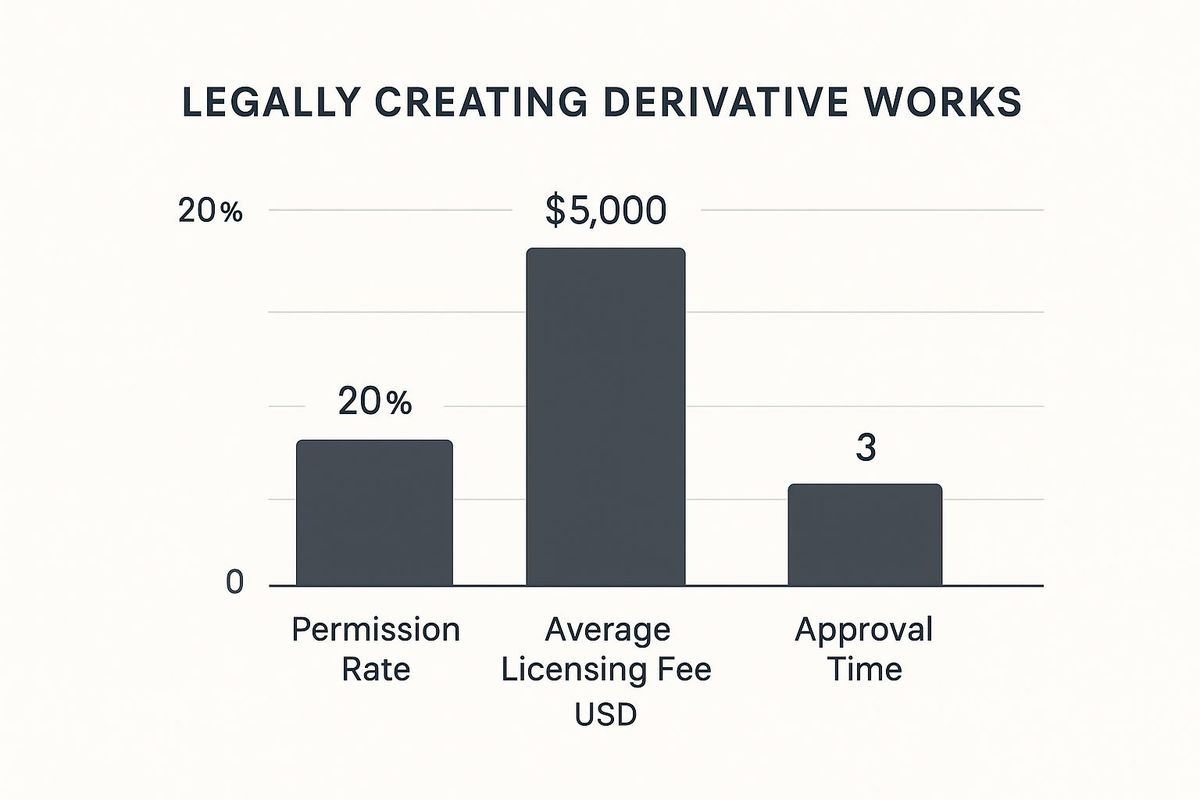
As you can see, seeking permission is a common step, but it can be a lengthy and costly one. That’s exactly why understanding your rights and obligations from the get-go is so vital.
Transformative Use vs Simple Copying
This brings us to the idea of transformative use, which is a cornerstone of the fair use defense. A new work is considered "transformative" if it adds a new message, meaning, or character to the original. Think about "Weird Al" Yankovic's songs. They take existing music and completely transform it into parody and humor. That's often protected.
In contrast, just changing the format isn’t enough. For example:
- Infringement: Scanning a copyrighted photograph and selling it online as a digital download.
- Derivative Work: Using that same photograph as the inspiration for a new, original painting that completely reinterprets the scene.
Here’s a quick table to make the distinction clearer.
Derivative Work vs Copyright Infringement
Aspect Legal Derivative Work Copyright Infringement Permission Created with explicit permission or license from the original creator. Created without any permission from the copyright holder. Legality A lawful creation that is itself eligible for copyright protection. An unlawful act that violates the original creator's exclusive rights. Transformation Adds substantial new authorship, creativity, or expression. Merely reproduces or makes minor, uncreative changes to the original. Purpose To create a new, distinct work (e.g., adaptation, translation, sequel). To exploit the original work's value without authorization.
Ultimately, the crucial test is whether the new work merely supersedes the original or if it adds something new, with a further purpose or different character. One builds upon the source, while the other simply exploits it.
Navigating this complex area is essential for protecting your own creative projects. For a deeper dive, our guide offers practical advice on how to avoid copyright infringement and stay on the right side of the law.
Common Questions About Creating Derivative Works
Even after you get the basics down, certain situations can still feel like a legal maze. Let's walk through some of the most common questions I get from creators trying to navigate the world of derivative works.
My goal here is to give you quick, practical answers for those tricky "what if" moments that always seem to pop up mid-project.
Is Fan Fiction Considered a Derivative Work?
Yes, fan fiction is a classic example of a derivative work. At its core, it takes existing characters, settings, and plots and spins entirely new stories from them.
Legally speaking, it lives in a gray area. While it technically infringes on the copyright holder's exclusive right to create new works based on their original, many creators tolerate or even encourage it—especially when it's not for profit. However, the original creator always retains the legal right to ask for it to be taken down.
Do I Need Permission for Using a Small Part of a Work?
Using even a tiny piece of a work can be considered infringement. Trust me, there’s no magic "five-second rule" or safe percentage that gives you a free pass. The law looks at whether the part you used is a substantial or core element of the original creation.
The "fair use" doctrine might protect you in specific cases like criticism, education, or parody, but it's a complex legal defense—not a guaranteed right. When in doubt, getting permission is always the safest path forward.
What if the Original Work Is in the Public Domain?
If a work is in the public domain, its copyright has officially expired. Think of it as being free for everyone to use. You can create any derivative work you can dream of from it without asking for permission or paying any fees.
This is exactly why we see so many modern takes on works by artists like Shakespeare or composers like Beethoven. Their originals are no longer under copyright, opening the door for endless creative reimaginings.
Does Giving Credit to the Original Artist Avoid Infringement?
No. This is one of the biggest myths out there. Simply giving credit or a shout-out to the original creator does not make an unauthorized use legal.
While it's good etiquette, attribution doesn't replace the legal need to get permission, usually through a license. Infringement is about the unauthorized use of copyrighted material, period. It’s the permission that counts, not the credit.
Navigating the complexities of copyright law can be challenging. At Cordero Law, we specialize in intellectual property and entertainment law, helping creators protect their work and bring their visions to life legally. If you need strategic counsel for your next project, learn more about how we can support you.