To get your work formally copyrighted, you'll need to file an application through the U.S. Copyright Office's official portal, send them a copy of your work, and pay a fee. It's true that your work gets automatic copyright protection the second you create it in a tangible form, but that's only half the story. Formal registration is what gives you the legal teeth to actually defend it.
Why Copyright Registration Is Your Creative Superpower
So many creators get tripped up on this. They hear "automatic copyright" and think they're all set. But in the real world, that's a dangerous assumption.
Think of it this way: automatic copyright is like owning a car. Registered copyright is having the title and a great insurance policy. Without that registration, you can't really do anything if someone steals it for a joyride. You can ask for it back, but you can’t sue them for damages.
Formal registration is what gives you power in the legal system. It's the only way you can file a lawsuit for copyright infringement in federal court. That’s not a recommendation; it's a hard-and-fast rule.
The Real-World Value of Registration
Let's say you're a photographer, and you find a huge company using your best cityscape shot in a national ad campaign. They never asked, and they certainly never paid.
- Without Registration: Sure, you can send them a cease-and-desist letter. But you have almost no leverage. You can’t take them to court for damages, so they might just ignore you or, if you're lucky, offer you pennies on the dollar.
- With Registration: Now we're talking. You can file an infringement lawsuit right away. Even better, if you registered your photo before they used it (or within three months of you publishing it), you can go after statutory damages and get your attorney's fees covered.
Statutory damages can range from $750 to $30,000 per infringed work. And if the company knew what they were doing was wrong, that number can jump all the way up to $150,000. This changes everything—it gives you real leverage and makes it financially possible to fight back.
The U.S. Copyright Office gives you everything you need to get started right on their official website.
This portal is the one and only official place to register. It's designed for creators like you to use directly.
Creative Hubs and the Importance of Protection
If you look at where copyrights are being registered, a clear pattern emerges. Professionals take this seriously. You see massive numbers of registrations coming out of creative hubs like New York, Los Angeles, and Chicago.
These are the places where creative industries are booming, and the people working in them know that formal protection is just a basic cost of doing business. It’s not an afterthought—it’s fundamental. This trend makes it clear: for serious creators, registration isn’t optional. You can read more about these geographic patterns on the Library of Congress blog.
At the end of the day, registration turns your creative project into a legally protected asset. Part of owning your work is also knowing how to teach others about it. For anyone making instructional content, diving into creating effective how-to guides is a great next step. This isn't just about filling out forms; it's about giving yourself the power to protect—and profit from—your hard work.
Is Your Creative Work Ready for Registration?
Before you dive headfirst into the paperwork, there's a crucial first step: making sure your work is actually eligible for copyright protection. Trust me, not every brilliant idea or clever phrase makes the cut. Understanding the rules right now will save you a ton of time, money, and frustration down the road.
The U.S. Copyright Office has two core requirements your work absolutely must meet.
First, your creation has to be original. This doesn't mean it needs to be some groundbreaking masterpiece that changes the world. The bar is actually pretty low—it just has to be independently created by you and possess at least a tiny spark of creativity.
Second, your work must be fixed in a tangible form of expression. This is just the legal world's fancy way of saying it exists in a stable format where someone can perceive or reproduce it. An amazing idea for a novel that’s only in your head isn't fixed. The moment you type it into a document or scribble it in a notebook, it is.
What Types of Work Qualify?
Most creative projects you can think of will fall into one of the main copyrightable categories. The key is that copyright protects the expression of an idea, not the idea itself. Let’s look at some real-world examples:
- Literary Works: This is a huge category. It covers everything from your latest blog post and marketing e-book to a full-length novel or a collection of poetry. Even software code is considered a literary work.
- Musical Works: This bucket includes both the musical composition (the melody and harmony) and any accompanying lyrics. For musicians, knowing the nuances here is vital. Our detailed guide on how to copyright music offers specific insights for artists looking to protect their songs.
- Visual Arts: Photographs, paintings, sculptures, graphic designs, and even architectural drawings all fit here. If you can see it and it's original, it's likely protectable.
- Motion Pictures and Audiovisual Works: This covers everything from a feature film to a short YouTube video, a documentary, or an animated clip.
- Sound Recordings: This protects the specific recording of a performance. Think of it this way: the sheet music for a song is a "musical work," while the MP3 file of a band actually playing that song is a "sound recording." They are two separate copyrights.
A common point of confusion is registering a collection. You can register a group of unpublished works together under a single application, which is a great way to save on fees. For instance, a photographer could register an entire month's worth of photos as one collection instead of filing for each one.
What You Absolutely Cannot Copyright
Knowing what doesn't qualify is just as important. The Copyright Office is crystal clear on these points, and trying to register them will just lead to a rejected application. You simply cannot protect the following:
- Ideas, Methods, or Systems: You can't copyright your amazing idea for a new social media app. You can, however, copyright the specific source code you write to build it.
- Names, Titles, and Short Phrases: The title of your book or song isn't copyrightable on its own. These are often protected by trademark law if they're being used to identify a brand, but that's a different area of law entirely.
- Facts and Data: You can't copyright the fact that the sky is blue. You can, however, copyright your unique article or chart that creatively presents factual information. The protection is in the expression, not the underlying fact.
- Works Lacking Originality: A simple list of ingredients in a recipe isn't creative enough. But the descriptive instructions, personal stories, explanations, and photos in a cookbook absolutely are.
Making sure your work meets these standards is the foundational first step. Once you're confident your creation is both original and fixed, you're ready to move forward with the registration process.
Alright, this is where the rubber meets the road. All that prep work pays off now as we dive into the U.S. Copyright Office's online portal, the eCO (electronic Copyright Office). It might sound like a stuffy government site, but it’s actually designed for creators like you and me. Think of it less like filling out a tax form and more like a guided conversation about your incredible work.
First things first: you need an account. Just head over to the official copyright.gov website and find the registration portal. You'll put in the usual info—name, email, secure password. Once that's done, you’ll land on your user dashboard. This is your command center for this registration and any others you do down the line.
Choosing The Right Application For Your Work
Once you're logged in, you'll be presented with a few choices. This is a critical step. Picking the right application type from the get-go is the key to avoiding delays or even a rejection.
Here’s a quick rundown of what you’ll likely see:
- One Work by One Author: This is the most common and simple path. It’s for you, a single person, registering a single piece of work. One photograph, one song, one article—you get the idea.
- A Collection of Unpublished Works: This is a fantastic, money-saving option if you create a lot. A photographer could register up to ten unpublished photos under a single application and fee.
- A Collection of Published Works (Group Registration): This is perfect for serial content. Think of a blogger who wants to register all the posts from June, or a magazine registering an entire issue. The rules here are specific, so be sure you qualify before choosing this one.
If you're an artist, we've got a guide specifically for visual creations. Our article on how to copyright artwork offers some targeted advice for painters, designers, and illustrators.
Navigating this online system is, by far, the most efficient way to get your work protected. The entire modern process is built around this portal.
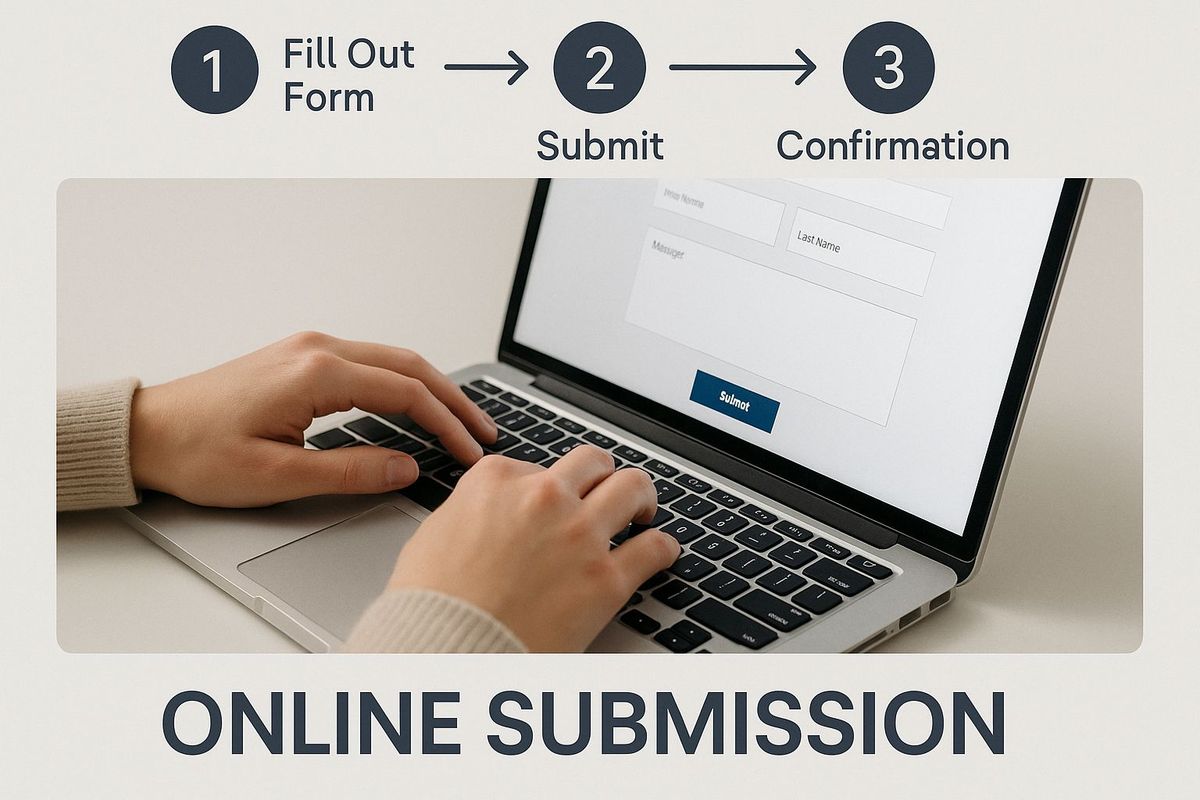
The system is pretty good at walking you through everything you need to provide for a successful submission.
Deciding which application to use can feel tricky, but it's usually straightforward once you know the options.
Choosing the Right Copyright Application
To make it even clearer, here’s a simple table to help you match your project to the right form. Most creators will fall into one of these common scenarios.
Type of Work Recommended Application Typical Use Case Single Song or Photograph One Work by One Author Registering a single creative piece you made by yourself. A Series of 10 Unpublished Poems A Collection of Unpublished Works Bundling multiple, unreleased works to save on fees. All Blog Posts from a Month A Collection of Published Works Registering a group of related, published items like articles or photos. A Book or Manuscript One Work by One Author Registering a single, complete literary work. An Album of Music One Work by One Author (for the sound recordings) Registering the collection of sound recordings as a single unit.
While there are other, more complex scenarios, this table covers the vast majority of what independent creators need.
Filling Out The Application With Confidence
Once you pick your application type, you’ll click through a series of screens asking for details about your work. It's not as scary as it sounds. Let’s walk through the key parts so you know exactly what to expect.
Title of the Work: Be precise here. If it's a book, enter the full title. For a song, use its official name. Don't add descriptive fluff—just the title the world will know it by.
Author Information: This is where you name the creator. If that's you, you’ll enter your name and details. But there's one piece of legal jargon that trips a lot of people up: "work made for hire."
A "work made for hire" is something created by an employee as part of their job, or a specific type of work you commission from a freelancer under a written contract. In these cases, the law says the employer or the person who commissioned the work is the author, not the individual who physically created it. This is a massive distinction for freelancers and businesses to understand.
Claimant Information: The claimant is the person or company that owns the copyright. Nine times out of ten, the author and the claimant are the same. But if you've sold or transferred your rights to, say, a publishing house, they would be the claimant.
Description of the Work: This is your chance to briefly explain what you made. You don't need to write a masterpiece. For a photo, "Photograph of the Brooklyn Bridge at dawn" is perfect. For a piece of software, "Computer program for managing client invoices" works. Just keep it simple and accurate.
Uploading Your Work And Paying The Fee
The home stretch involves uploading a digital copy of your work and paying the registration fee. The portal takes most common file types, but it's smart to double-check their guidelines for your specific medium.
A PDF is standard for a book. An MP3 works great for a song. A high-quality JPEG is perfect for a photograph. This file you upload is called your "deposit copy," and it’s the official version the Copyright Office keeps on file.
After your file is uploaded, you’ll be sent to the payment page. The fees are pretty reasonable, especially when you think about the legal firepower you're getting. Right now, the average processing time for an electronic application is about 2.1 months, though that can definitely vary.
Once you pay and hit submit, you'll get a confirmation email. And that's it! You've done it. Your copyright protection is legally effective as of the date the office received your complete application, deposit, and fee. Now you just sit back and wait for that official certificate to arrive in the mail.
What to Expect After You Hit Submit
You did it. You filled out the forms, uploaded your creative work, and hit that final submit button. It’s a great feeling, but it’s often followed by a big question: now what?
The period after submission is mostly a waiting game, but knowing the timeline and what’s happening behind the scenes can make it a lot less stressful.
Here's the good news: once your application, deposit copy, and fee are all received by the U.S. Copyright Office, your copyright is considered legally effective from that date. The processing itself, however, takes time. An examiner needs to review everything you sent to make sure it meets all the legal requirements.
This is a good moment to appreciate the broader impact of what you've just done. Registering your work is a personal protective step, sure, but it also strengthens the entire creative economy.
Globally, the copyright sector is a massive component of economic activity. In the U.S. alone, copyright-intensive industries contribute approximately 7.8% of the gross domestic product (GDP), which translates into roughly $1.8 trillion annually. You can explore more insights on how intellectual property fuels the economy from the U.S. Chamber of Commerce.
Understanding the Processing Timeline
Let's set some realistic expectations. The Copyright Office is not Amazon Prime; your certificate won't arrive in two days. The timeline for processing can vary a lot based on how you filed and the current workload at the office.
- Standard Electronic Filing: This is the most common method and the one I always recommend. You can generally expect a processing time of 2 to 3 months before you hear anything or get your certificate in the mail.
- Mail-in Paper Filing: If you opted for the old-school paper route, be prepared for a much longer wait. These applications can take 6 to 10 months—or sometimes even longer—to process.
These are just averages, so your mileage may vary. The key is to be patient and keep a copy of your submission confirmation for your records.
Pro Tip: Don’t panic if you haven't heard back right away. The effective date of your registration is the day the office received your complete application, not the day they approve it. This means your work is protected during that entire waiting period.
Special Handling for Urgent Cases
What if you can’t wait several months? Maybe you’ve discovered someone infringing on your work and need to file a lawsuit immediately, or you have a critical business deadline breathing down your neck. In these rare cases, you can request special handling.
This is an expedited service that comes with a hefty price tag—currently $800, on top of your regular filing fee. If the office grants your request, they will typically process your application within five business days. But, and this is a big but, you need a compelling, documented reason to qualify.
You might need special handling if:
- You are in the middle of active or pending litigation.
- You have customs matters that require immediate registration.
- You have contractual or publishing deadlines that absolutely cannot be moved.
For most creators, the standard process is perfectly fine. Special handling is a powerful tool, but it's really reserved for genuine emergencies.
What If the Copyright Office Contacts You?
Sometimes, an examiner might have a question or find a small issue with your application. Don't freak out! This is not a rejection. It’s simply a request for more information or a clarification.
I've seen this happen for a few common reasons:
- A discrepancy between the author and claimant information.
- An unclear description of the work.
- Issues with the deposit copy you submitted.
If you get an email or letter from an examiner, just respond promptly and clearly. Answer their questions directly and provide whatever information they've requested. A quick and cooperative response is the best way to get your application back on track and moving toward that final approval.
Avoiding Common Registration Pitfalls
Let's be honest, the copyright registration process can feel a little nitpicky. But learning from the mistakes others have made is the quickest way to get your application approved without a hitch. The process itself is pretty logical, but tiny errors can lead to frustrating delays or, in a worst-case scenario, an invalid registration.
Think of your application like a precise legal document—because it is. Even a simple typo in your work's title can create a headache down the line. It's a small detail, but it's exactly the kind of thing that makes an examiner send your application back for clarification, adding weeks to your timeline.
Let's walk through the most common slip-ups so you can sidestep them completely.
Mixing Up Author and Claimant
This is a big one. It seems simple, but the legal distinction between the author (the person who actually created the work) and the claimant (the person or company who owns the copyright) is absolutely crucial. They're often the same, but not always.
For example, imagine a freelance photographer is hired by a corporation to shoot a series of images for an ad campaign under a "work made for hire" agreement. In that situation:
- The Author: The corporation, not the photographer.
- The Claimant: The corporation.
Getting this wrong can call the validity of your entire registration into question. Before you even start filling out the form, double-check your contracts to be crystal clear about who the legal creator and owner really are.
Submitting the Wrong Deposit Copy
The file you upload to the Copyright Office is called the "deposit copy." This becomes the official, permanent record of your work. It's surprisingly common for people to accidentally upload the wrong version—an early draft of a manuscript, a low-res photo, or an unmastered audio track.
The version you deposit is the version that is legally protected by that specific registration. If you later need to prove infringement, you'll be comparing the infringing work to the exact file you uploaded. Make sure it's the final, complete, and best-quality version of your creation.
This isn't just about good record-keeping; it's about the strength of your legal protection. A sloppy deposit can seriously weaken your case if you ever have to go to court to enforce your rights.
Forgetting to Disclose Pre-Existing Material
Many creative works build on something that came before them. If your work includes significant material you didn't create yourself or that was previously published or registered, you have to disclose it on the application.
This could be things like:
- A novel that includes a few chapters from a short story you published last year.
- A song that incorporates a sample from another artist's recording.
- A new version of a software program that uses code from a previous version.
Failing to mention this pre-existing material is a serious error. It can look like you're trying to claim copyright over something you don't own, which could invalidate your registration entirely. A key part of protecting your work is knowing what crosses the line, which is why it's smart to learn more about how to avoid copyright infringement in your own creative process.
A Note on Global Protection
While we're focused on the U.S. system here, it’s worth remembering that intellectual property is a global game. The attention to detail required for a U.S. registration is a universal principle. International trends show a massive push for IP protection worldwide. For instance, data from the World Intellectual Property Organization (WIPO) shows China has surpassed the U.S. in designations for international protections, highlighting the growing importance of emerging markets. You can discover more insights about these global IP trends from WIPO. This global context is a good reminder that no matter where you are, careful and accurate registration is the foundation of strong protection.
Your Copyright Questions Answered
Even with a step-by-step guide, you're bound to have questions. It’s totally normal. Let's tackle some of the most common ones I hear from creators so you can get this done with confidence.
Do I Need a Lawyer to Register a Copyright?
Probably not. For most creators, the U.S. Copyright Office’s online portal is designed to be a DIY process. If you’re registering a single book, song, or photograph you created yourself, it's pretty straightforward.
But, if things get a little complicated, hiring an intellectual property attorney is a smart investment. You should seriously consider getting professional help if:
- Your project involves multiple authors or contributors with different ownership shares.
- You're using pre-existing material (like a sample in a song or a photo in a collage) and aren't sure how to handle it.
- You’re navigating a tricky "work made for hire" situation.
In those cases, a lawyer can make sure your application is bulletproof and gives you the strongest protection possible from day one.
How Long Does Copyright Protection Last?
Federal law is generous here, making sure your work is protected for a very long time. How long depends on who created it.
For an individual author creating work today, the copyright lasts for your entire life plus an additional 70 years. This ensures your family or heirs can manage and benefit from your work long after you're gone.
The rules are different for works made for hire, or for works published anonymously or under a pseudonym. For those, protection lasts for 95 years from the date of first publication or 120 years from the creation date, whichever comes first.
One thing I see all the time with authors is assuming their publisher handled the registration. Even if it's in the contract, things fall through the cracks. Always, always check the public records yourself to confirm the registration was actually filed.
What Is the Difference Between Copyright, Trademark, and Patent?
This one trips up a lot of people, but it’s simple when you think of them as different tools for different jobs.
- Copyright: This protects your original creative expression. Think novels, song lyrics and melodies, photographs, paintings, and software code.
- Trademark: This protects your brand identity. It's your band's logo, your company name, or a catchy slogan. It's what tells customers, "This came from me."
- Patent: This protects inventions. It covers new and useful machines, processes, or chemical formulas. If you invented a new kind of guitar pedal, you'd patent it.
So, you would copyright your new album, trademark your band's name, and patent the new audio software you built to record it. Many authors get stuck on the specifics of protecting their manuscript. For a deep dive focused just on that, check out this guide on how to copyright a book.
Can I Register a Website or Blog for Copyright?
Yes, and you absolutely should if you're serious about your content. The key is understanding what you're actually protecting. You can't copyright a domain name or a basic website layout, but you can definitely copyright the original content on the site.
This includes all of your original:
- Blog posts and articles
- Photographs and custom graphics
- Videos and podcasts
The trick isn't to register every single post the moment you hit publish. A much more efficient strategy is to register your content in batches. For instance, you could file one application every three months to cover all the new articles, photos, and videos you published in that quarter. It's a cost-effective way to protect a growing library of work.
At Cordero Law, we believe in empowering creators with the knowledge to protect their work. If you're navigating the complexities of intellectual property, our team is here to provide strategic counsel and genuine support. Visit us at corderolawgroup.com to see how we can help safeguard your creative vision.